
Last Updated:
What happens on the first visit
- Joints, barrel and gradeThe camera pass separates joint problems such as roots, gaps and offsets from cracks or breaks in the clay barrel itself. Distances and approximate depths are recorded so each defect can be tied to a spot on the ground, not just a point on the video.
- What to have readyHave the dates of any root clearing, which drains back up first, and any earlier inspection video. Note large trees near the line, recent landscaping or hardscape work, and whether the side sewer is shared with a neighbor before it reaches the street.
- What one inspection can missRoots and debris can hide cracks and offsets until the pipe is cleared. A first pass may need clearing and a second look before the repair length and method can be fixed. The age of the clay alone does not decide replacement.
- What arrives in writingThe proposal lists each defect by distance, the method chosen for it, where repair begins and ends, the couplings to the remaining clay, whether a shared section is involved, the permit path, restoration lines and the inspection after repair.
A clay sewer can have recognizable, serviceable pipe barrels and a serious problem at one joint. It can also have defects repeated along the run. Those situations should not receive the same repair recommendation simply because the material is old. The location and extent of the findings decide what is worth retaining.
Douglas Sewer Line Repair Seattle provides clay sewer pipe repair for private laterals, with work performed by fully licensed and insured contractors. The work can involve a defined joint repair, suitable rehabilitation or wider replacement where the evidence supports it. The starting point is what the actual line shows, not a blanket rule that all clay pipe must go.
Separate the clay barrel from the joint problem
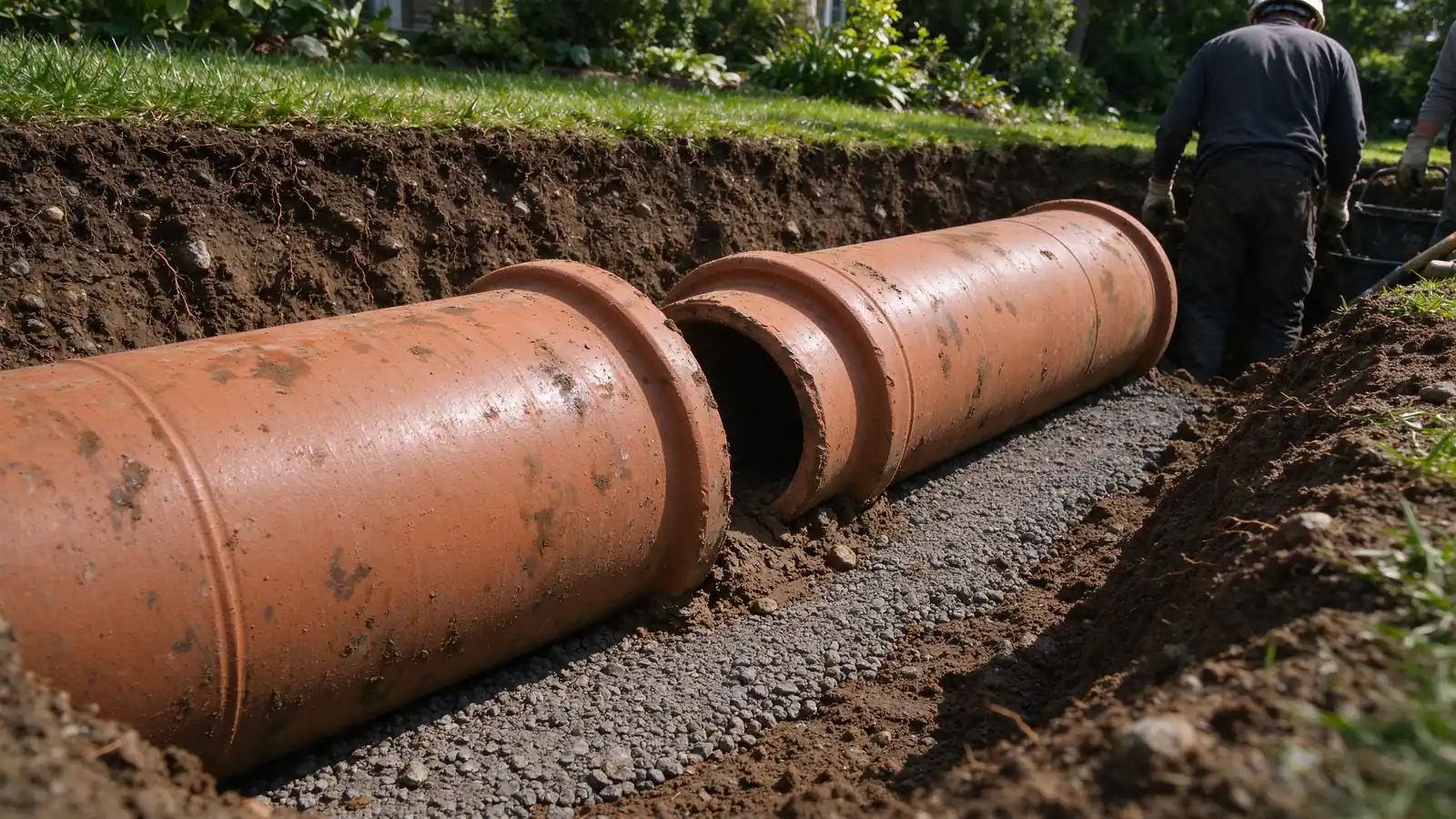
Clay is a rigid sewer material installed in sections. Its condition depends on the barrels, joints, connections and support along the route. A joint can shift or lose a watertight interface even where the adjacent barrels remain recognizable. That opening can admit roots or surrounding material and create a place where solids catch.
A crack is a different observation from an offset. A cracked wall needs its severity and extent assessed. An offset means one section has moved relative to another, creating a change at the joint. The two can occur together, but the report should name what can be seen instead of using “bad clay” to cover several different mechanisms.
Seattle Public Utilities identifies roots and defects at older clay and concrete joints in its side-sewer guidance. This is useful regional context. It does not establish that a particular tree caused a defect, that every joint has failed or that every older property still has the original sewer.
Use preparation to improve the evidence
Roots, deposits and standing water can obscure a clay pipe’s interior. Suitable preparation may improve visibility, while a severe obstruction can prevent the camera from reaching the remainder. Ask whether the recording shows conditions before cleaning, after cleaning or both. Different preparation can explain why two reports appear to describe different pipes.
Root removal restores a passage where suitable but does not close the joint through which growth entered. If roots recur at the same point, the repair discussion should address that opening and the condition around it. A clean-looking barrel after cutting is not proof that the joint is sealed.
A camera inspection should keep its access point, direction and limits with the recording. Surface locating helps connect a visible defect to an approximate work area. The camera’s travel distance is not automatically a measurement from the house wall or the property line, especially when the route changes direction.
When a targeted clay-pipe repair can make sense
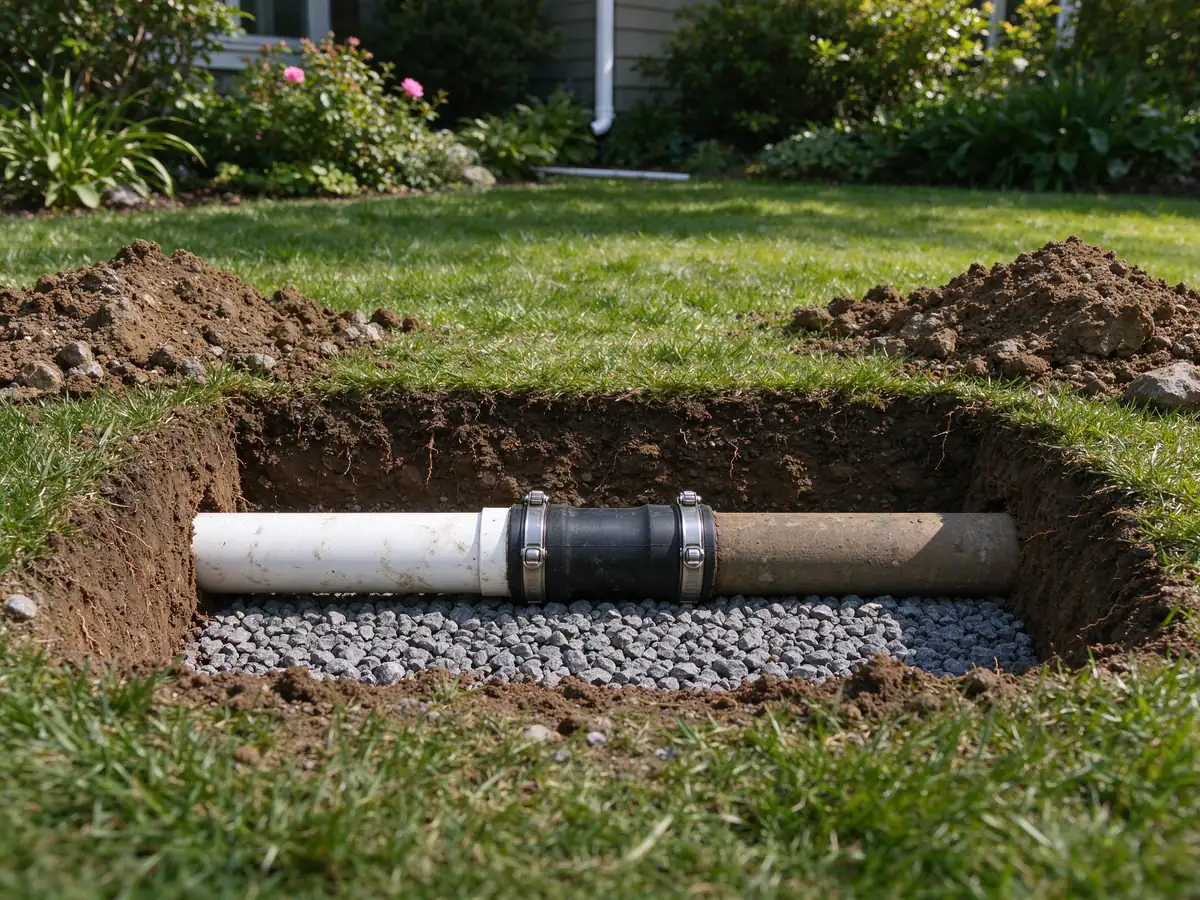
A localized repair can replace a short failed section while retaining sound pipe on either side. Its value depends on knowing where the damage stops and whether suitable connection points exist. The plan should show the retained material, joining method and support beneath the new section rather than leave the transitions as an afterthought.
If the camera stopped at the damaged joint, the condition beyond it may still be unknown. A sectional-repair recommendation needs enough evidence about the remaining line to be meaningful. It should not claim that an unseen downstream run is sound merely because the first accessible barrel looks good.
The access footprint also matters. A short joint repair below a paved walkway can require more surface work than its pipe length suggests. The written scope should identify the opening, backfill, compaction and finish boundaries. A small repair is a physical work boundary, not a promise that every cost will be small.
Compare lining and replacement against the defect
Pipe lining can be considered when the host is suitable for the proposed system. Preparation, shape, continuity and connections matter. A liner follows the existing route, so it does not lift a low section or correct every alignment issue. Ask the recommendation to explain how it handles the actual joint finding.
Pipe bursting replaces along the old route where access and clearances permit. The presence of clay does not alone establish feasibility. Nearby utilities, bends, branches and the route condition can affect the pulling and connection plan, and access pits still have to be included.
Excavation offers direct access when grade, alignment or unsuitable sections need attention. A broader replacement can be relevant for repeated failures or extensive deterioration. Comparing methods is useful only when they address the same work endpoints and do not leave the diagnosed problem untouched.
| Clay-sewer condition | Scope question |
|---|---|
| Isolated open or damaged joint | Can the surrounding pipe be retained with suitable transitions? |
| Roots obscuring the connection | What defect remains visible after suitable clearing? |
| Repeated offsets along the route | Would a short repair leave several known restrictions? |
| Standing water in a low section | How will the chosen method address the profile? |
| Suitable continuous host | Is lining appropriate for the actual shape, access and branches? |
Shared clay laterals and Seattle ownership
A side sewer’s material does not establish who owns it. In Seattle, the private owner-maintained run can continue beyond the lot line toward the public-main connection. Confirm the actual endpoint before assuming a clay joint beneath the street is part of the municipal main or belongs in an unrestricted private excavation scope.
Where branches join a common run, identify the shared section before defining the repair. Symptoms in one building do not establish that the defect is on that property’s exclusive pipe. Recorded agreements and access rights can affect authorization. The contractor can describe the physical arrangement without deciding how neighbors divide responsibility or cost.
Seattle Public Utilities handles the side sewer permit pathway. Public right-of-way excavation or staging can involve SDOT, while interior plumbing has a separate interface. The proposal should identify the relevant authorities for the work location rather than apply one generic regional permit line to every project.
New transitions, bedding and verification
A repair has to connect new work to the actual retained clay, which can vary in dimensions and condition. The selected fittings and joining details need to be suitable for that connection. A pipe name or the word “coupling” alone does not describe an installation specification or prove the old ends are appropriate to retain.
Bedding and support matter because a new section can still develop problems if its connections are poorly supported. Ask how the excavation and installation address the observed alignment and what is checked before cover. Where the scope includes new sewer pipe longer than ten feet, SPU states that pressure testing is required.
Keep the available verification recording, applicable inspections and permit closeout information with the final work description. A camera can document visible condition, while a warranty is a separate contractual commitment if one is offered. Neither should be used to imply that every retained clay joint on the property has been renewed.
Price the work length and access, not the material label
A defined Seattle-area spot repair where the remainder is sound has planning context of $1,950–$8,800. A complete lateral replacement belongs to a different band of $13,000–$41,600. Neither range is a clay-only quote or a verified market average, and substantial access or restoration can move a project beyond the published span.
For a suitable lining candidate, the local installed-lateral context is $7,000–$21,000. That figure should not be compared with a joint repair without checking the scope endpoints and work solved. The cost guide separates the categories and explains why a per-foot number alone does not establish an installed project total.
Get an Estimate for clay sewer pipe repair with the full recording, known access and any competing scope. Explain whether the decision is about one joint, recurring roots or a larger run. A useful recommendation makes the difference visible in the proposed work.
What the scope should include
- Root clearing needed for a usable inspection
- Defect list by distance and approximate depth
- Named method for each defect or section
- Shielded couplings and bedding at transitions
- Side sewer permit and inspection steps
- Restoration lines and post-repair camera record
How clay sewer pipe repair compares with the alternatives
| Option | What it changes | What it leaves | Fits when |
|---|---|---|---|
| Root clearing | Opens flow by cutting roots out of clay joints | The open joints roots will grow back through | Flow needs restoring before inspection, or as planned maintenance |
| Spot repair | Replaces a cracked or offset clay length with new pipe and shielded couplings | Other clay joints along the run | One defect stands out and the remaining clay is sound |
| CIPP lining | Seals joints and cracks inside the clay without trenching the run | Bellies and severe offsets, which the liner follows | The clay holds its shape and the grade is acceptable |
| Full replacement | Installs continuous new pipe on a corrected slope | The public main and any stub outside the scope | Many joints fail, sections have collapsed or grade is lost |
How clay sewer pipe repair moves from inspection to record
- Clear and inspectCut roots enough to pass a camera, then record the line from cleanout to connection.
- Map joint defectsMark each open joint, crack and offset by distance and approximate depth.
- Choose the methodDecide between spot repair, lining and replacement by how many joints fail and the grade.
- Permit and repairObtain the side sewer permit and complete the work with proper bedding and couplings.
- Re-inspectRun the camera through the repaired line and keep the recording with the scope.
What this work looks like
Questions about this work
Can clay sewer barrels remain usable when one joint fails?
Yes, a joint defect does not automatically establish failure of every barrel. The surrounding route needs sufficient assessment before a localized repair can be justified.
Why distinguish a cracked clay wall from an offset socket?
They describe different conditions. A crack concerns the wall, while an offset changes alignment between sections. The repair should explain how it addresses each documented finding.
Does cutting roots from a clay joint close the opening?
No. Clearing removes growth from the passage where suitable. The joint can remain open, so maintenance and structural repair should be described as separate choices.
Can lining clay pipe remove a low section in its route?
A liner follows the host path. It does not lift a sag or establish a new grade. A confirmed low section needs a plan that addresses elevation and support.
What makes a clay-to-new-pipe transition part of the specification?
The retained dimensions, condition and connection requirements determine the suitable fitting and support. A generic coupling label is not enough to describe every transition.
Should a clay sewer spot-repair scope explain the pipe beyond a blocked camera?
Yes. An uninspected remainder stays uncertain. Another access or further investigation may be needed before claiming the damage is isolated and the rest can be retained.
Do clay sewer repair costs depend only on the number of broken joints?
No. Depth, access, repair length, utilities, permits and restoration can change the scope. A short defect below hardscape can involve substantial work above the pipe.
What does a clay-lateral completion recording leave outside its promise?
It documents visible conditions along the route reached. It does not renew every retained joint, inspect every branch or create a warranty beyond any separately written agreement.