
Last Updated:
What happens on the first visit
- Measuring the low sectionThe camera records where water stands in the pipe, how deep it gets and how long the low section runs, measured by distance. A sonde marks the start and end on the surface, so the possible dig length can be judged against what sits above it.
- What to have readyNote how often the line needs clearing, which drains slow first, and any settlement, past excavation or utility work near the route. Earlier inspection video helps show whether the sag has grown or is unchanged.
- What video can and cannot showStanding water shows a belly exists but hides the pipe floor beneath it, including cracks or offsets inside the sag. The visit cannot say why the bedding failed until the section is exposed, and a minor sag may not need repair at all.
- The written recommendationThe scope states whether repair is recommended, the length to be regraded, why lining alone will not lift it, excavation and trench protection, the permit path, bedding and backfill, restoration, and the camera check for standing water afterward.
Water standing in a sewer recording is a finding to interpret, not a complete measurement of a belly. A low section can hold wastewater and collect solids, but the visible water needs to be related to the inspection direction, pipe route and flow conditions before a grade-correction scope is chosen.
Douglas Sewer Line Repair Seattle assesses and repairs low sewer sections serving homes, shared connections and commercial properties. Work is performed by fully licensed and insured contractors. Sewer belly repair in Seattle focuses on the pipe profile and its support, rather than promising that cleaning or a new internal lining will lift a sag.
Understand what a belly changes underground
A gravity lateral relies on a suitable route toward the receiving sewer. When part of that route settles, wastewater may remain in the low portion after the surrounding pipe has drained. The retained water can reduce the effective passage and create a place for material to collect. A pipe can therefore look structurally recognizable while its profile is causing trouble.
The condition is different from roots crossing the bore or a broken barrel blocking the path. Several defects may coexist, but each changes the repair decision in its own way. Cutting roots does not raise the pipe, and replacing a cracked wall along the same low route does not necessarily remove the collection point.
Some water seen during inspection may reflect the conditions at that moment. A useful report describes the water’s visible extent and the limits it imposes on viewing the wall. It should not infer an exact sag depth from an image that cannot establish the pipe’s full internal profile.
Separate drainage history from a concealed diagnosis
Describe which fixtures are affected, how often the obstruction returns and what changed after cleaning. Repeated trouble at the same recorded location can be useful evidence, but a recurring backup is not proof that the line contains a belly. A downstream blockage or receiving-system problem can produce overlapping symptoms.
Wet-weather patterns also deserve care. Seattle has documented public drainage and sewer constraints in particular areas, including Broadview and South Park. A backup after rain should not automatically become a private grade-correction sale. The investigation needs to distinguish the private lateral’s condition from the system it drains into.
If wastewater is entering occupied space, reduce sewer use and keep people away from contamination. Do not open an access point under pressure, enter a trench or attempt to test the line yourself. Describe the conditions to qualified assistance and contact the utility where a public-system problem is suspected.
Establish the route before planning elevations
Existing sewer records can help explain the historical alignment. They do not guarantee today’s depth, route or material. A camera inspection and surface locating help relate the low section to a physical work area. The available upstream and downstream elevations remain important when deciding what correction is feasible.
A footage counter records travel along the camera’s path from the access point. It does not automatically equal a straight distance across the yard. Bends, the inspection start and changes in direction need to be understood before deciding where a localized excavation would begin and end.
The contractor should explain what further assessment is needed to set a replacement section on an appropriate profile. If the receiving connection, building exit or nearby utilities constrain the route, those limitations belong in the proposal. A promise to make the entire lateral steeper without investigating its endpoints is not a useful specification.
Grade correction usually requires access to the affected section
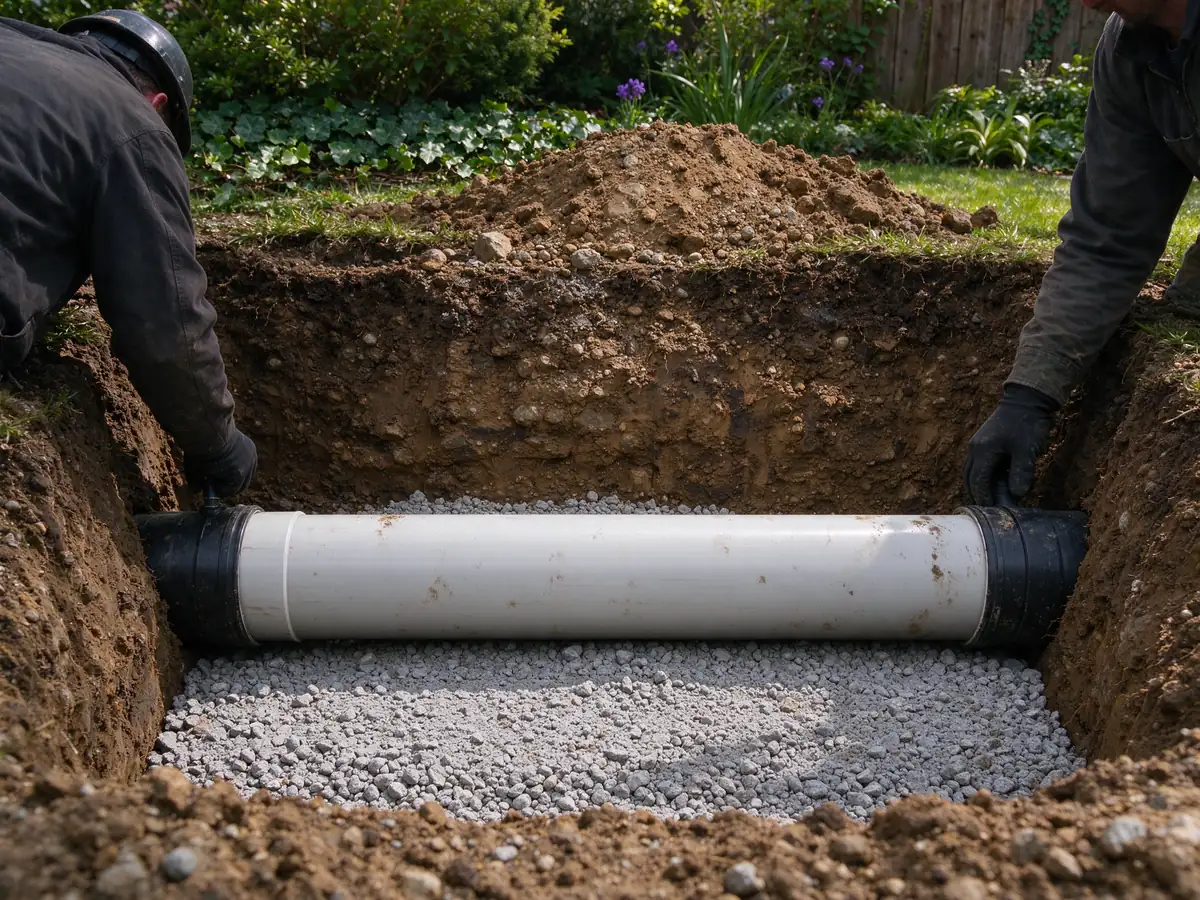
Open excavation can expose the low section, allowing failed pipe to be removed and new work supported at the intended alignment. The repair has to address bedding and transitions as well as the pipe itself. The length of the correction may be greater than the visibly deepest point because the new section must join suitable retained pipe.
Support is part of the result. A connection hanging between two sound-looking ends is not a substitute for a continuously supported installation. The scope should identify preparation beneath the new section, treatment of disturbed ground and the applicable inspection or testing before covering the work.
Access can dominate a relatively short repair. A low section beneath a driveway, footing interface or narrow passage creates a different work area from a shallow open lawn. Nearby utilities, excavation protection, hauling and surface restoration need planning. The homeowner should not be asked to enter the opening to confirm what the contractor has exposed.
Compare renewal methods against the actual grade problem
A CIPP liner forms a new interior within a suitable host pipe. It follows the existing path. If the central problem is a low profile, the lining proposal must explain why retaining that profile is appropriate. A stronger wall does not, by itself, change where water remains.
Pipe bursting replaces pipe along an existing route where access and clearances permit. It should not be offered as a guaranteed way to lift a sag. A trenchless proposal may still require localized excavation to address a low section, make a transition or resolve a branch connection.
Broader line replacement may be justified when the profile problem is accompanied by extensive damage or unsuitable retained sections. The distinction should be explained in terms of findings and endpoints. A single pool of water on a screen does not establish that every pipe beneath the property needs replacing.
| Proposed action | What it can change | Belly-related limitation |
|---|---|---|
| Cleaning | Remove accumulated material | Does not raise the low pipe. |
| Internal lining | Renew a suitable host’s interior | Retains the existing route and profile. |
| Pipe bursting | Replace along an existing path | Does not guarantee grade correction. |
| Localized excavation and regrading | Change the exposed section and its support | Needs suitable endpoints and an investigated route. |
Build Seattle approvals into the correction scope
Seattle Public Utilities handles the side sewer permit pathway, while interior plumbing has a different regulatory interface. Work affecting the street can also involve SDOT requirements. The City’s permit guidance should be checked for the actual work rather than assuming a short excavation is exempt.
Private responsibility can extend beyond the property line. A low point near the street needs to be related to the public-main connection and ownership records before the private estimate includes that section. On a shared run, the locations where branches join and any access agreements also affect authorization and sequencing.
What a belly-repair estimate should price
There is no verified Seattle price band specific to every belly correction. A limited correction may resemble a localized repair, for which the regional planning span is $1,950–$8,800. That is context for a defined scope, not a promise that a grade repair will fit inside it. Deep work, hardscape or difficult endpoints can change the category substantially.
Ask for the proposed correction length, access footprint, pipe and transition details, excavation measures, bedding, backfill and surface finish. An accessible standalone inspection has a $250–$500 local planning range, but cleaning and additional investigation may be separate. The cost guide explains how to compare exclusions without inventing a depth multiplier.
Insurance treatment depends on the policy and cause, not merely the word belly in a report. Keep the original finding and ask the carrier what evidence and prior review it requires. No payment arrangement or coverage outcome should be assumed when authorizing the physical work.
Verify the corrected scope and the retained limits
Agree beforehand on how sewer use will be restricted and how an unexpected condition is documented. At completion, keep the repaired endpoints, available verification recording, applicable inspection results and final restoration scope. Ask whether any retained low portion or uninspected branch remains outside the work.
Get an Estimate with the property location, drainage history and full camera report. The useful next step is establishing a feasible corrected profile, not choosing a renewal method before the low section has been understood.
What the scope should include
- Camera measurement of sag length and water depth
- Sonde marking of the section to be regraded
- Excavation plan with trench protection
- Rebuilt bedding, pipe and compacted backfill
- Side sewer permit and inspection before backfill
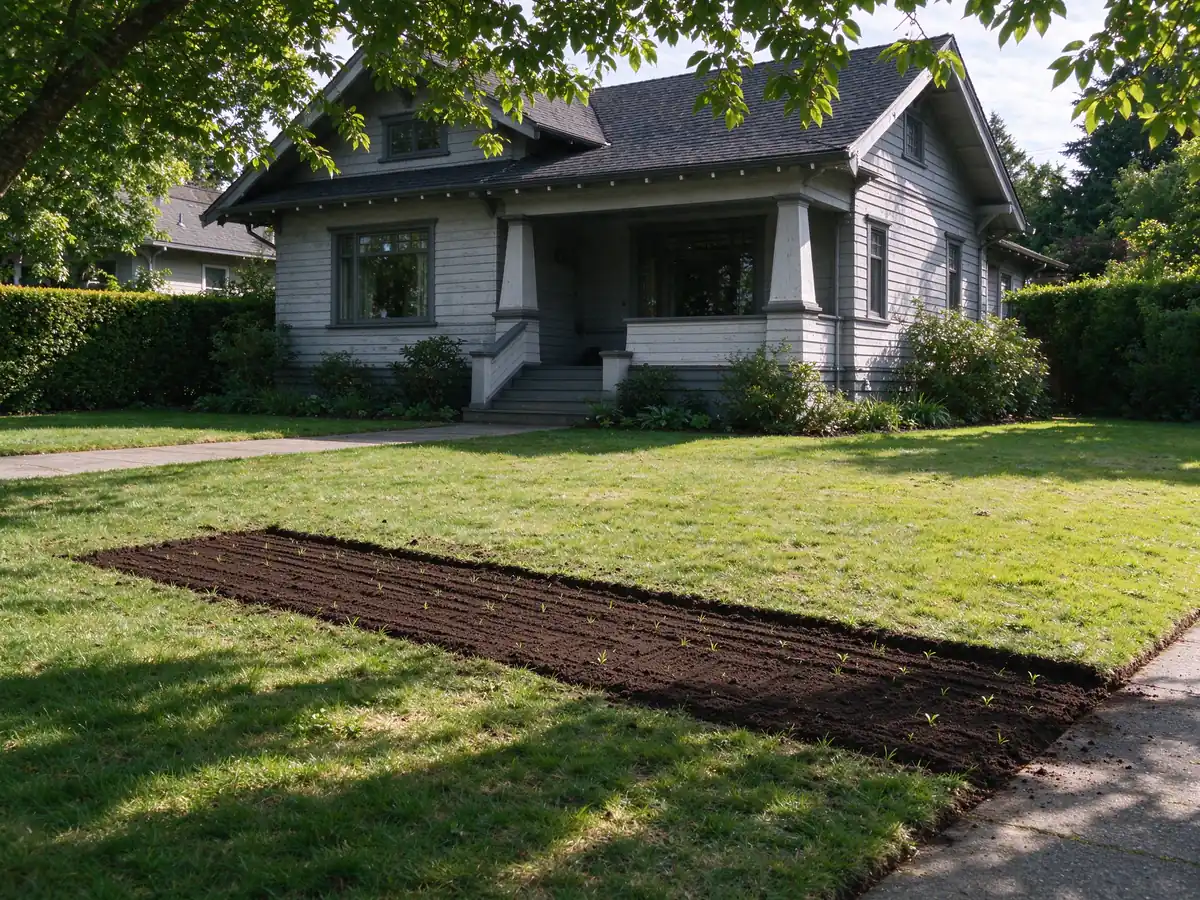
- Restoration lines and post-repair camera check
How sewer belly repair compares with the alternatives
| Option | What it changes | What it leaves | Fits when |
|---|---|---|---|
| Routine cleaning | Clears solids that settle in the low section | The sag itself | The belly is shallow and repair is knowingly deferred |
| CIPP lining | Seals cracks and joints inside the sag | The belly; a liner follows the host pipe's grade | The sag is minor and joint leakage is the main problem |
| Pipe bursting | Replaces pipe along the old path | The low spot, because the head follows the existing route | Rarely for a belly; only when the sag is minor |
| Excavated regrade | Re-beds and relays the section at a continuous slope | Pipe outside the excavated length | Standing water or solids in the belly cause backups |
How sewer belly repair moves from inspection to record
- Measure the sagRecord the belly's length, standing water depth and distance on camera.
- Mark the surfaceTrace the start and end with a sonde to set the excavation length.
- Decide if it needs repairWeigh backups and cleaning frequency against the dig and restoration.
- Regrade the sectionExcavate safely, rebuild bedding and relay the pipe at continuous slope.
- Confirm the slopeCamera the repaired run to confirm water no longer stands.
What this work looks like
Questions about this work
Does every pool of water on a sewer recording prove a belly?
No. The recording direction, flow conditions and visible extent need interpretation. Water is a finding, not a complete measurement of depth, length or cause.
Can hydro jetting permanently remove a sewer belly?
Jetting can remove accumulated material where suitable, but it does not raise the pipe or change its support. A confirmed profile problem needs a separate decision.
Why might a belly repair extend beyond the deepest point?
The new section needs suitable transitions and an appropriate route between retained endpoints. The visible deepest point may not define the complete correction length.
Will pipe bursting automatically correct the low sewer profile?
No. Bursting generally follows the existing path. Ask how any required grade change will be achieved rather than assuming replacement also changes elevation.
What information helps estimate a low section beneath a driveway?
Provide the complete recording, located route if available, inspection access point and photographs of the surface. The actual depth and excavation footprint still need assessment.
Can a lined sewer still hold water in the same low place?
Yes. A lining follows the host route and does not lift a sag. A proposal should explain whether retaining that profile is appropriate for the documented condition.
Does a rain-related backup establish the need for regrading?
No. Private defects and receiving-system conditions can overlap. The inspection and utility context should separate those possibilities before a private correction is chosen.
What shows which low section was actually corrected?
Keep the final endpoints, available verification, applicable approvals and retained-condition notes together. They distinguish the agreed correction from pipe left outside the scope.