
Last Updated:
What happens on the first visit
- Is it really one defect?The camera records the defect and the condition of the pipe on either side of it, by distance. A spot repair only makes sense if the adjacent pipe is sound enough to connect to and no other defects sit close by.
- What to have readyHave the video that shows the defect, any earlier inspection, and notes on what sits above that spot: paving, plantings, a fence or utilities. Know where the cleanout is so the line can be re-inspected.
- What the visit cannot settleA sonde gives the location and approximate depth, but soil, groundwater and the exact condition at the joint are only confirmed when the pipe is exposed. Pipe beyond a blockage may not be visible yet.
- What comes in writingThe scope states the repair location and length, the method, couplings to the existing pipe, excavation and trench protection, the permit path, restoration over the repair and the camera inspection of the repaired section.
Sewer spot repair in Seattle targets a defined defect while retaining the serviceable line around it. That can be an appropriate response to one failed joint or short damaged section. Its value depends on knowing where the problem stops, not simply choosing the smallest excavation visible on the first camera pass.
Douglas Sewer Line Repair Seattle provides localized private side sewer repair for residential, shared and commercial connections. Work is performed by fully licensed and insured contractors. A useful proposal identifies the failed section, explains why the retained pipe is a reasonable part of the plan and makes the access and restoration boundaries clear.
One visible defect is not automatically an isolated failure
A camera may find an obvious crack or offset near the beginning of a run while roots, water or an obstruction prevent inspection farther along it. That supports a finding at the visible location. It does not establish that the unseen remainder is sound. The difference matters when a small repair is being compared with a wider replacement recommendation.
Ask how much of the lateral was assessed and whether preparation is needed to inspect the rest. The contractor should distinguish evidence of a single localized defect from a plan to address the first obstruction and then reassess. Both situations can involve a short excavation, but they carry different uncertainties and should not be sold as identical finished scopes.
Match the repair type to the defect
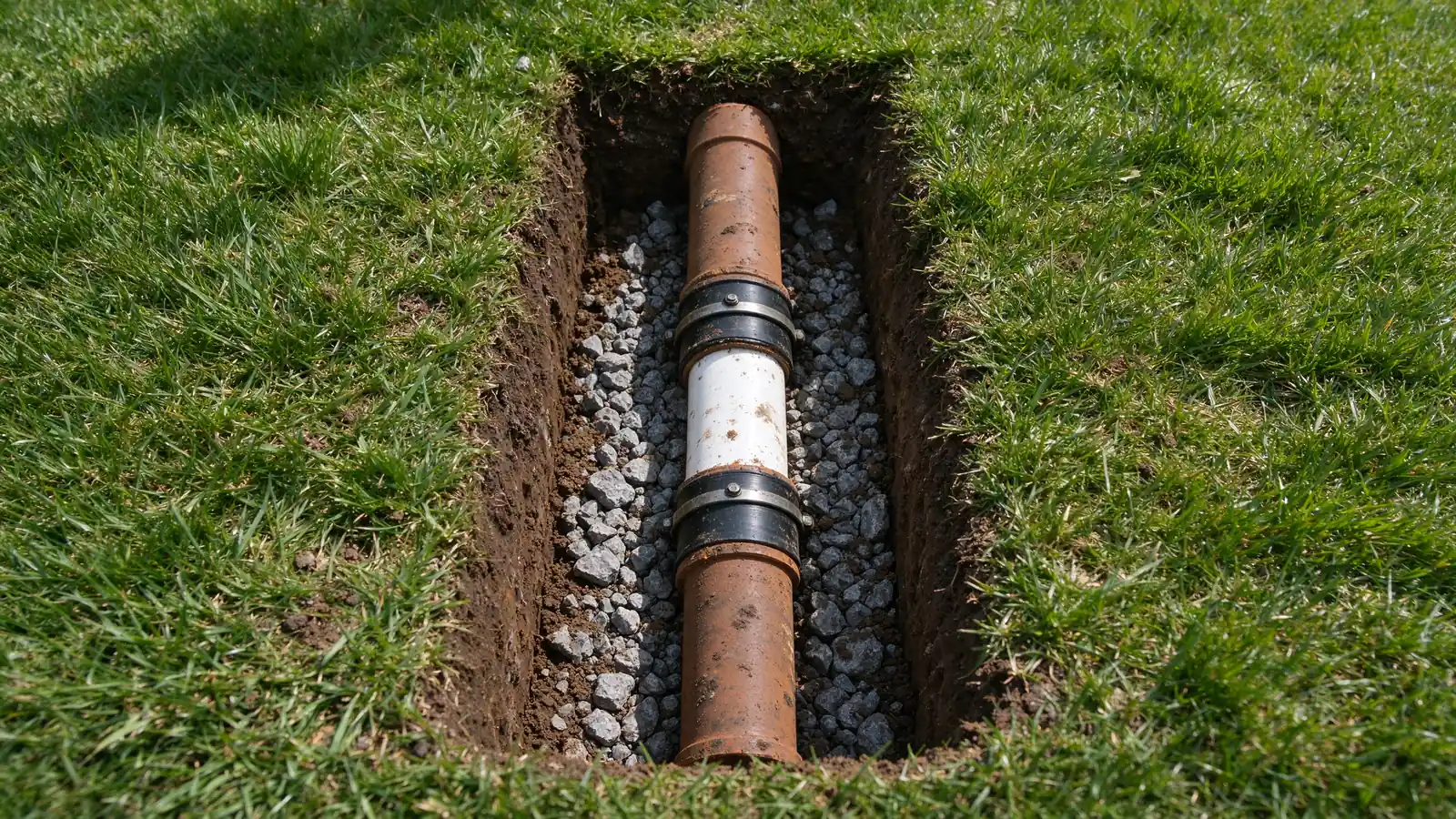
An open spot repair exposes the affected pipe so the damaged portion can be removed or the connection corrected. It can also provide access to address support or alignment at that location. A sectional lining approach treats a suitable localized host section internally, rather than replacing the surrounding bedding or changing the route.
Those choices are not interchangeable. A low section that requires its profile changed presents a different problem from a small opening in an otherwise suitable host. A severe offset or collapse may limit internal repair options. The proposal should explain what the method changes at the defect and what condition it expects from the retained pipe at each end.
Confirm the excavation position before cutting a surface
The inspection’s footage counter tracks travel through the pipe from its access point. It is not a straight-line measurement across the property. Surface locating and the available records help connect the finding to the work area. This is especially important when a small target lies near a driveway edge, wall or building exit.
The access plan should identify the expected opening rather than promise an arbitrary hole size before the route and depth are understood. Space for protective measures, equipment and safe material handling can affect the footprint. A short damaged pipe section can therefore need more surface access than its installed length suggests, without changing the repair into a full lateral replacement.
Retained ends and transitions are part of the repair
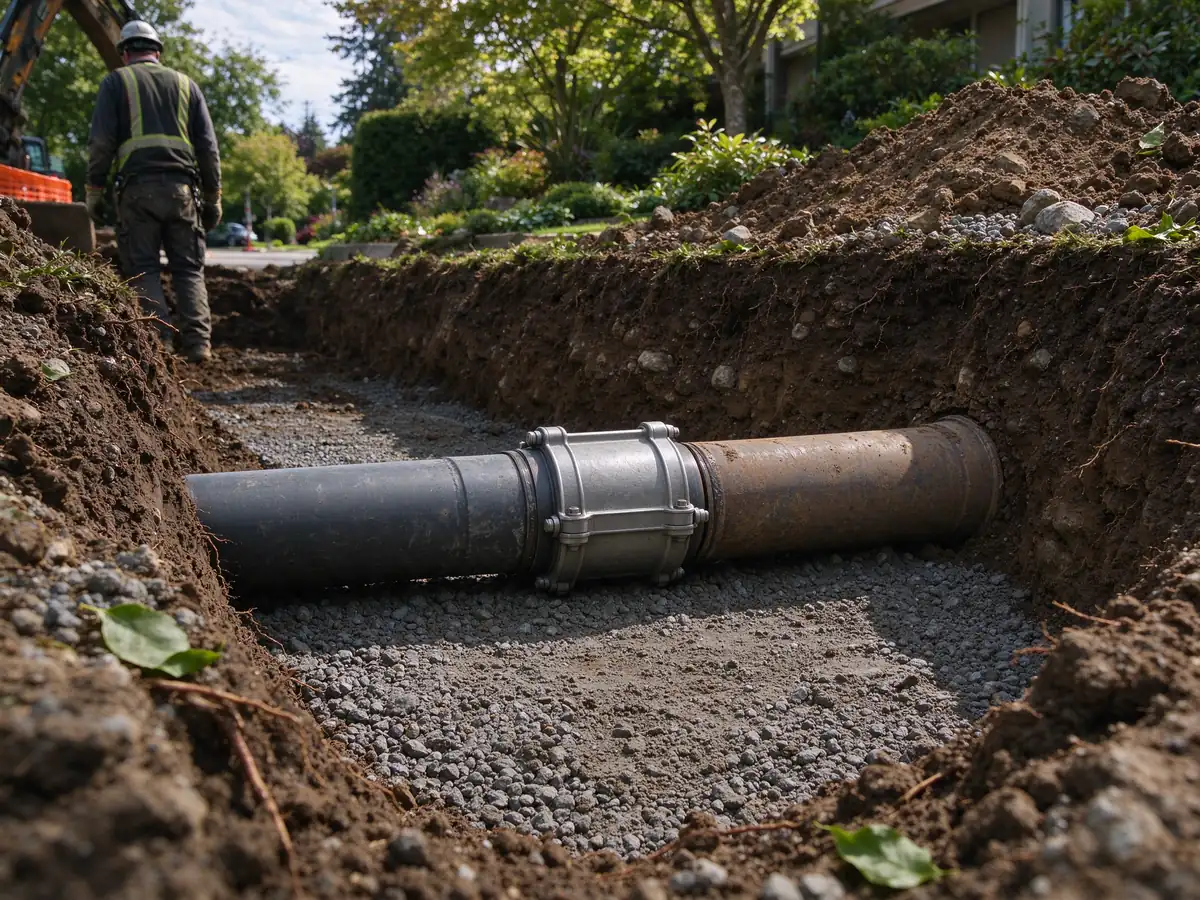
A new short section must join the existing sewer at appropriate points. Different materials, diameters or conditions at those ends can change the fittings and work required. A connection should not be specified solely by the appearance of the new pipe. The proposal needs to describe how the retained ends will be incorporated and supported.
Bedding and support matter because replacing a broken wall without addressing a localized support issue can leave a related problem unresolved. Ask whether the repair is intended only to renew the damaged segment or also to correct the affected alignment. Where a building interface or branch lies close to the defect, identify whether it is inside the quoted scope rather than assume it is included.
| Localized finding | Spot-repair decision | Reason a wider plan may still be needed |
|---|---|---|
| One damaged joint | Establish sound pipe on both sides | Additional defects may appear beyond an inspection limit. |
| Short collapsed section | Determine safe access and suitable retained ends | Deformation can continue along a larger part of the route. |
| A low portion of the run | Explain how support or grade is corrected | An internal patch may leave the low profile unchanged. |
| A defect at a branch | Define how the branch remains connected | Shared or building interfaces may extend the work. |
| A crack beneath paving | Compare repair and access boundaries | Surface restoration can outweigh the short pipe length. |
Repair the pipe, not just the recurring symptom
Root clearing can restore flow while leaving an open joint. Cleaning may be an appropriate maintenance decision for a serviceable line, or it may be preparation for a structural repair. A spot repair is a different commitment: it should identify the defect that is being changed, not merely promise another period of improved drainage.
Likewise, a backup does not prove a specific pipe section is broken. The investigation must connect the symptoms to the visible condition and consider whether the affected section is private. A recommendation based only on where wastewater appeared inside the house can miss the actual location of the restriction or a receiving-system issue. The camera-report guide explains what makes that connection defensible.
Seattle work boundaries can extend past the lawn
A localized defect near the street still needs an ownership check. Seattle private side sewer responsibility can extend beyond the property boundary toward the public-main connection. Do not assume a repair stops at the lot line simply because the excavation is small. Shared lines also need the affected common section and authorization understood before work is arranged.
Seattle Public Utilities’ permit guidance describes the side sewer pathway. Street work can involve separate Seattle Department of Transportation requirements. The scope should say who handles the applicable permits and inspections. If the installation includes new pipe longer than 10 feet, SPU’s pressure-testing requirement also matters; a completion recording does not replace an applicable installation test.
Budget for the localized scope and its surfaces
A Seattle-area spot-repair planning range is $1,950–$8,800 per project where the remainder is serviceable. It is not a Douglas quote or a statement that every small defect falls within that span. Depth, access, material transitions, street work and the surface finish can change the installed cost substantially.
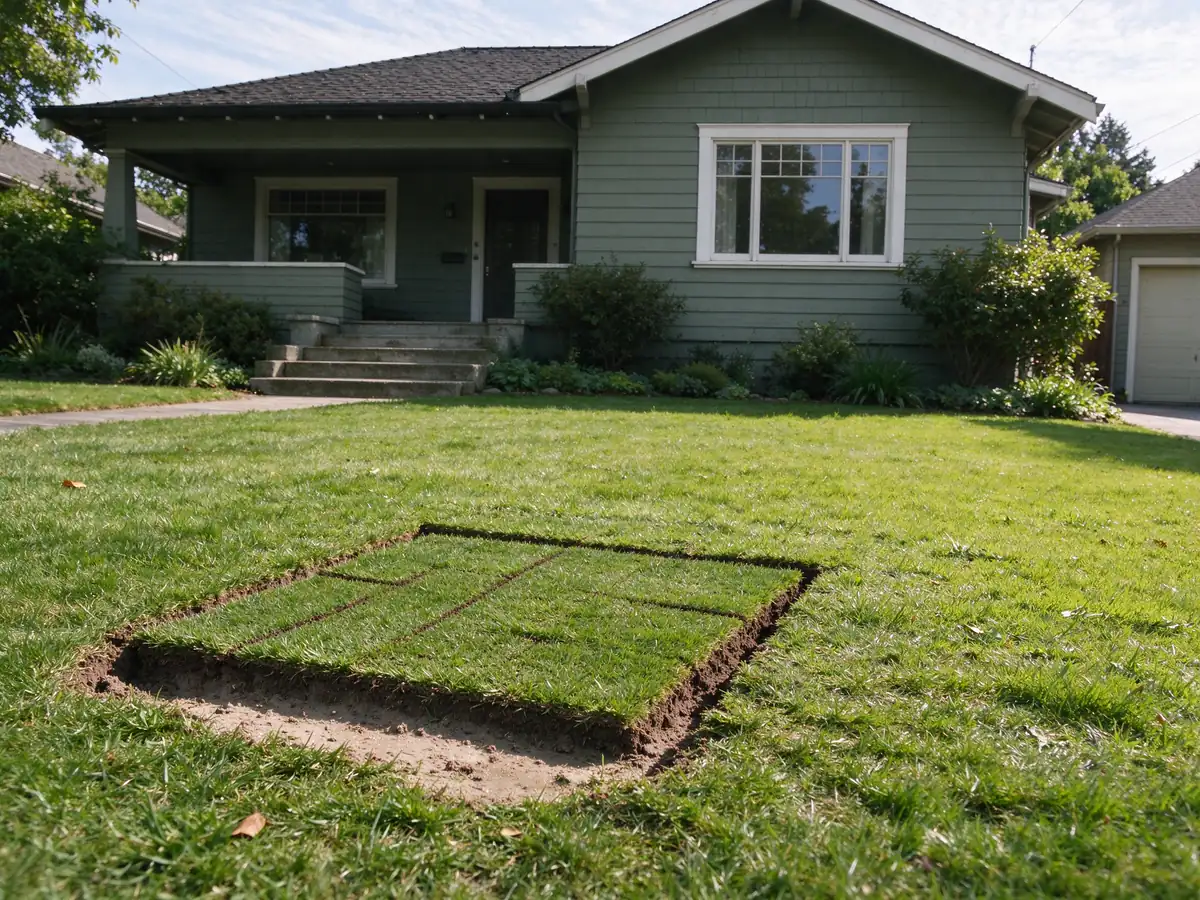
Ask whether the price includes locating, any inspection preparation, access excavation, hauling, bedding, backfill and restoration. Confirm whether paving or landscape work is included, excluded or provisional. A limited repair beneath concrete should not be compared with a simple lawn repair as though the damaged pipe length were the only difference. The spot-repair cost guide provides a more useful comparison framework than a guessed per-foot total.
Keep a decision point for conditions hidden before opening
An inspection can leave uncertainty about the outside of the pipe or the condition immediately beyond an obstruction. A written proposal should explain how additional findings are documented and how a changed scope is authorized. That helps prevent a small repair agreement from becoming an undefined commitment to keep replacing pipe as excavation proceeds.
If insurance may contribute, ask the carrier about the specific cause and evidence before relying on coverage. The completion record should identify the section changed, the retained pipe and the applicable approvals. Available verification footage is useful, but it does not turn a localized repair into a guarantee about every connected drain.
Get an Estimate for sewer spot repair with the property address, recording and known access conditions. You do not need to decide that a short repair is enough before making contact. That conclusion should follow the evidence about the failed section and the remainder you would be keeping.
What the scope should include
- Camera confirmation of a single defined defect
- Sonde location and approximate depth
- Stated repair length and method
- Couplings to the existing pipe at both ends
- Permit, trench protection and restoration
- Post-repair camera record of the section
How sewer spot repair compares with the alternatives
| Option | What it changes | What it leaves | Fits when |
|---|---|---|---|
| Excavated spot repair | Replaces one defined section with new pipe and couplings | The rest of the line | One located defect sits in otherwise sound pipe |
| Sectional point liner | Lines a short section from inside without digging | Bellies and severe offsets at that spot | The defect is a crack or joint leak in a pipe that holds shape |
| Full-length lining | Forms new pipe along the whole run | Grade problems along the run | Several defects are spread along an otherwise intact host |
| Line replacement | Replaces the whole run with new pipe | The public main unless included | Defects are many, scattered, or the material keeps failing |
How sewer spot repair moves from inspection to record
- Confirm the defectRecord the defect and the pipe on each side of it on camera.
- Mark the spotTrace the location and approximate depth with a sonde.
- Choose dig or linerDecide between an excavated repair and a point liner.
- Permit and repairObtain the permit and replace or line the defined section.
- Re-inspectCamera the repair and the transitions to the existing pipe.
What this work looks like
Questions about this work
What evidence supports calling a sewer defect localized?
The inspection should establish the failed section and enough of the surrounding run to support retaining it. An unseen remainder beyond a blockage is an uncertainty, not evidence that the defect is isolated.
Is a sectional sewer liner the same as an excavated spot repair?
No. A sectional liner treats a suitable host internally. An excavated repair provides direct access to remove damaged pipe or change a local connection, support or alignment. Compare the result each method is intended to deliver.
Why can the access opening be longer than the failed pipe section?
Safe access, fittings, retained pipe ends, protective measures and equipment handling can require additional working space. The proposal should explain the footprint instead of equating damaged length with surface opening size.
Can a spot repair include a change to a low pipe profile?
It can when the defined work actually addresses the affected alignment and support. A wall patch alone does not lift a belly. Ask the scope to state what profile correction, if any, is intended.
Does root cutting count as a structural spot repair?
Clearing roots can restore passage without sealing the entry defect. A structural repair should identify the opening or failed section being changed and explain what retained pipe remains outside the work.
What could expand a spot-repair scope after the pipe is exposed?
Unsuitable retained ends, hidden damage or a condition beyond an earlier inspection limit can change the work. The agreement should explain how findings are documented and additional work is authorized before proceeding.
Can a spot repair near a Seattle street ignore the public connection boundary?
No. Private responsibility can extend beyond the lot line, and street-side work can have separate approval requirements. Establish ownership, work limits and the applicable authority before authorizing excavation.
Does a spot-repair price include rebuilding every disturbed surface?
Not necessarily. Paving, planting, backfill and finish boundaries need explicit inclusions or exclusions. A localized pipe repair can still involve substantial access or restoration work that changes the total.