
Last Updated:
What happens on the first visit
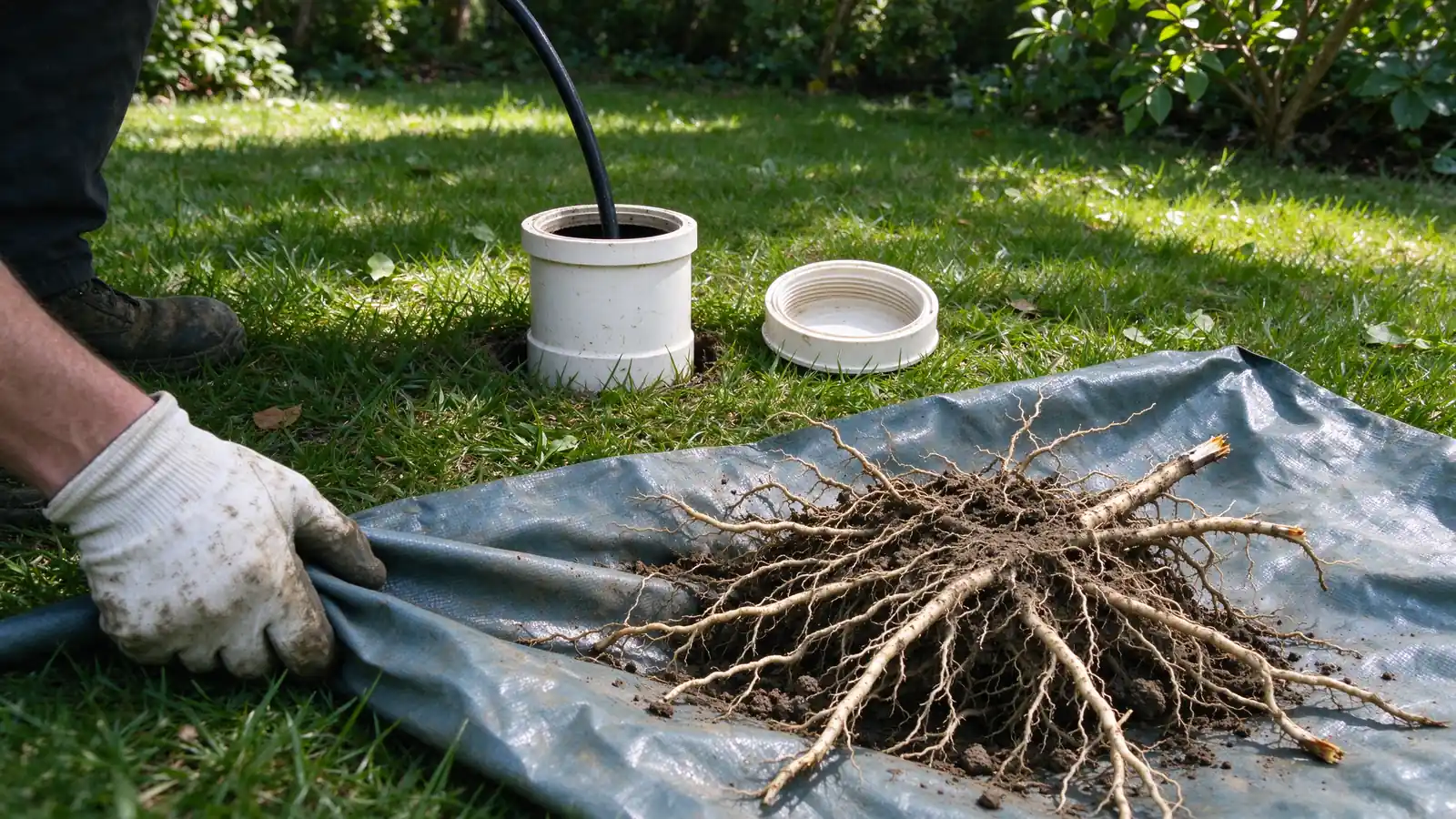
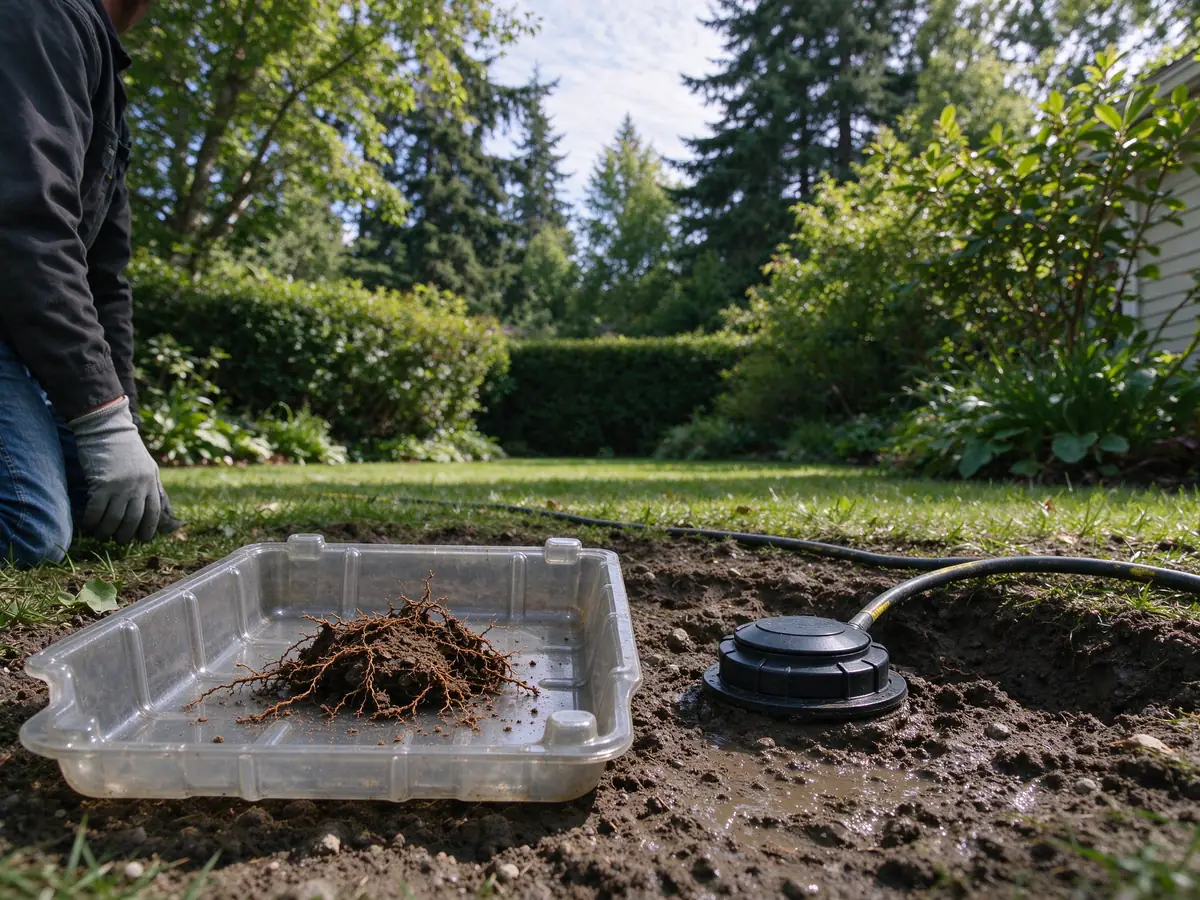
- Where roots get inAfter enough clearing to pass a camera, the inspection records each joint or crack where roots enter, by distance. A sonde can mark the worst points from the surface, which helps tell whether the trouble comes from one tree or many joints.
- What to have readyNote how often the line has needed clearing and when, which drains slow first, and where large trees and shrubs sit near the sewer route. Earlier video helps compare root entry over time.
- What clearing can and cannot doCutting roots restores flow but leaves the joint open, so regrowth is expected. The visit cannot say how quickly roots will return, and it cannot clear roots outside the pipe or advise on removing a tree.
- What comes in writingThe scope states the clearing method and length, the camera findings at each entry point, whether the pipe shows cracks or offsets as well, and any repair recommended to seal the entry points, described separately from cleaning.
Roots inside a sewer explain an obstruction, but they do not explain the entire repair. The important distinction is between removing the growth that is blocking wastewater and correcting the opening that let it enter. Those can be separate scopes, with different costs and different reasons to proceed.
Douglas Sewer Line Repair Seattle provides sewer root removal for private laterals serving homes, shared connections and commercial properties. Work is performed by fully licensed and insured contractors. The aim is to restore a useful passage where cleaning is suitable, document the remaining condition and make the next decision on evidence.
How roots get into a sewer
A sound sewer is not simply punctured by every tree growing nearby. Roots can exploit an existing opening at a joint, crack or damaged connection where moisture is available. Fine growth can expand inside the pipe and catch paper and other material. A relatively small entry point can therefore produce a much larger restriction within the flow path.
Seattle Public Utilities describes roots as a common side-sewer issue, particularly with older clay and concrete pipes whose joints are not watertight. That is a reason to examine a joint carefully, not proof that every clay line or every tree is a problem. A house’s age also does not establish what materials remain underground after earlier repairs.
The City’s defect guidance is useful background. For the property itself, retain the recording that shows where roots enter and what can be seen around them. A photograph of a nearby tree cannot establish the condition of the sewer or justify tree removal.
Clearing the roots and inspecting the pipe are connected tasks
The initial discussion should establish which fixtures are affected, how often the problem returns and what happened during previous cleaning. A single slow fixture and several fixtures backing up together do not point to identical scopes. If a recording already exists, its access point, direction and inspection limit matter as much as the most alarming frame.
A camera inspection may show a root mass clearly while leaving the wall behind it obscured. Suitable clearing can expose that wall and allow the inspection to continue. If the camera still cannot pass, the uninspected remainder stays unknown. The blockage should not be used to declare every unseen section failed or serviceable.
Surface locating helps relate the finding to an approximate position above the pipe. The footage counter alone measures travel from the camera access; it is not automatically an excavation position or a measurement from the property line. Keep those reference points in the findings so that another proposal addresses the same defect.
Choose a clearing method that suits the existing material
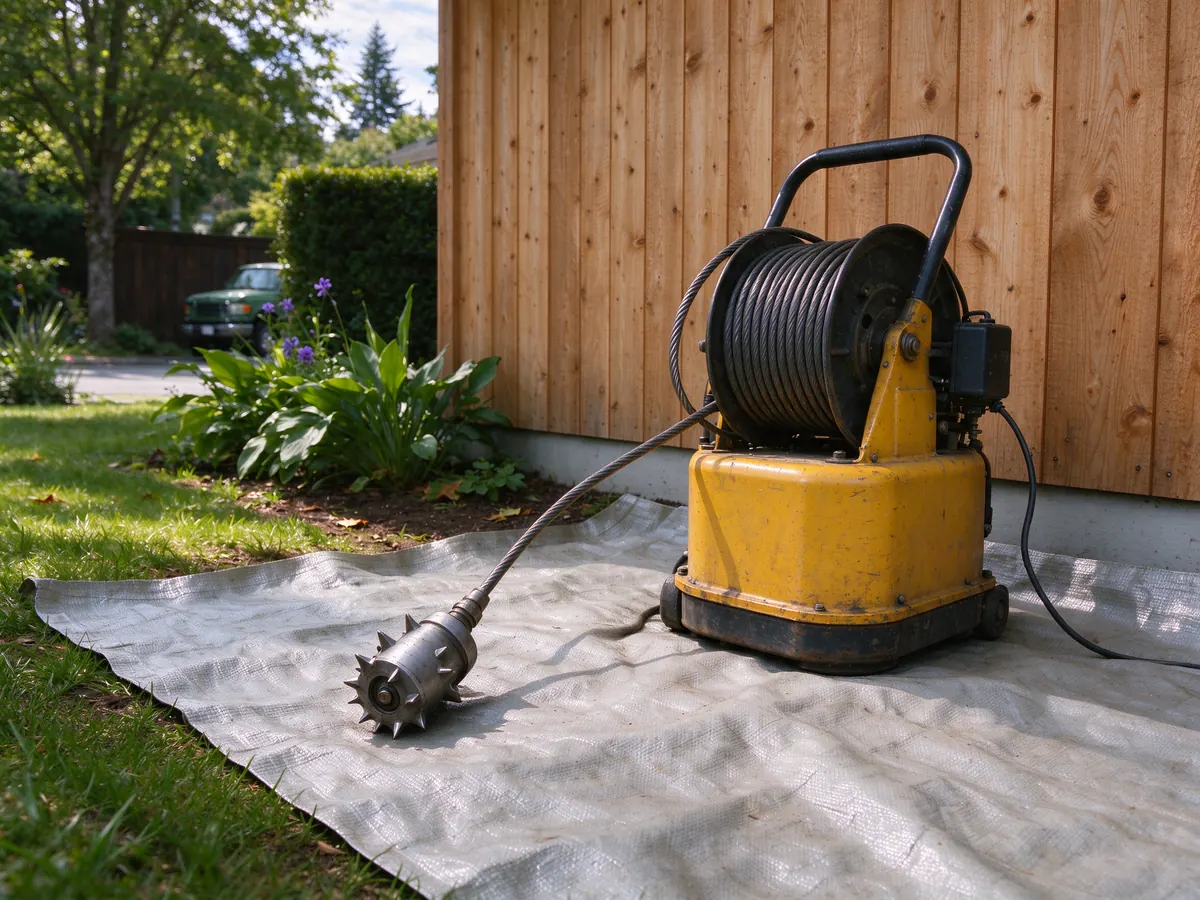
Mechanical root cutting uses an appropriate tool to remove growth from the passage. Sewer hydro jetting can also be considered when access, material and condition support that approach. The contractor needs to choose the equipment and procedure for the known pipe, rather than assume that more aggressive cleaning is always more effective.
A deformed fiber pipe, a heavily deteriorated metal section and a sound clay barrel with roots at one joint are different situations. Severe loss of shape, broken pipe or a large offset can limit what cleaning can safely achieve. The scope should explain the known condition and any reason to stop rather than force equipment beyond an obstruction.
Clearing does not install a new pipe wall. It does not lift a low section or realign a displaced joint. Even a visibly open passage after cleaning can retain the defect through which roots entered. The useful outcome is therefore described in terms of flow restoration, the findings after preparation and the limits of the cleaned route.
When maintenance is reasonable and when repair deserves a closer look
Maintenance can be a practical decision where the remaining pipe is serviceable and the owner understands that the entry opening remains. No universal interval fits every lateral. The quantity of growth, the joint condition, what the recording reaches and the pattern between visits are better starting points than a calendar promise applied to every property.
A spot repair may address an isolated damaged joint when the rest of the run has been assessed and is worth retaining. Pipe lining can be considered for a suitable host pipe after preparation. Repeated defects, severe deformation or a collapsed area can instead change the discussion to replacement.
| Finding after clearing | Decision to discuss |
|---|---|
| One root entry with otherwise serviceable pipe | Maintenance versus repair of the defined opening |
| Several damaged joints | Whether repeated clearing leaves too much unresolved damage |
| A low section retaining water | A grade investigation, not a promise that lining lifts the pipe |
| Camera stopped beyond the roots | Further investigation before declaring a complete scope |
| A shared run | Connected properties, work authorization and access rights |
Seattle ownership and repair approvals still matter
Root removal in a private sewer should not be confused with maintenance of the municipal main. In Seattle, the owner-maintained side sewer can extend beyond the lot boundary toward the public-main connection. The exact endpoint and any shared arrangement need checking before a defect beneath the street is automatically assigned to the City.
If the findings lead to structural repair, Seattle Public Utilities’ side sewer permit pathway becomes part of the scope. Street excavation or staging can also involve SDOT. A cleaning visit should not be presented as permission to excavate or alter a connection without the applicable approvals.
Shared lines deserve special care because the symptom may appear in one building while the root entry is on a common run. The inspection should identify the branches and the affected section. It does not decide how neighbors split a bill, create an easement or establish authority to enter someone else’s property.
Budget for the actual scope, not a permanent-root-removal promise
A standalone accessible camera inspection has a local planning range of $250–$500. Cleaning, locating, difficult access and additional work can be separate. That inspection range is not a root-removal price, and there is no defensible flat figure here for every amount of growth, pipe condition or access arrangement.
If an isolated defect needs repair, the Seattle-area spot-repair context is $1,950–$8,800. It applies to a defined repair where the remainder is sound, not to a maintenance visit. Ask whether the proposal includes the clearing required for inspection, a recording after preparation and the separate structural work, if any.
The cost guide separates inspection, localized repair, lining and replacement. Keeping the work categories separate prevents a low clearing price from being mistaken for permanent renewal. Likewise, an expensive replacement recommendation should explain why the documented root entry cannot sensibly be managed or repaired on a smaller scope.
Keep the evidence after the line is opened
Ask what the post-clearing recording actually reaches and whether any portion remains obscured. Keep the access location, distances, visible entry points and condition description together. If maintenance is chosen, document what remains in place and what changes in symptoms should prompt another assessment rather than an automatic repetition of the last visit.
If wastewater is entering the building, reduce use and keep people away from the contaminated area while qualified help is arranged. Do not enter an excavation or open a cleanout under pressure to look for roots. A suspected public-system problem should also be reported to the serving utility; visible roots do not establish that every backup has the same cause.
Get an Estimate for sewer root removal with the property location and whatever findings are already available. Describe the recurring problem and the decision you need to make. You do not need to choose between maintenance, spot repair and lining before the pipe has been adequately assessed.
What the scope should include
- Root clearing method and length cleared
- Camera inspection of root entry points
- Entry points recorded by distance
- Notes on cracks or offsets found with the roots
- Separate scope for any sealing repair
- Video record to compare future regrowth
How sewer root removal compares with the alternatives
| Option | What it changes | What it leaves | Fits when |
|---|---|---|---|
| Mechanical root cutting | Cuts roots out to restore flow | The open joints roots entered through | Flow needs restoring and the pipe should be inspected next |
| Hydro jetting | Scours fine roots and residue from the pipe wall | Open joints and any cracks | The pipe is structurally sound and the root mass is fine |
| Repair at entry points | Seals or replaces the joints roots are using | The tree and untreated joints elsewhere | Root entry is limited to a few identifiable joints |
| Line replacement | Installs continuous, joint-tight pipe | The tree and its roots near the line | Roots enter along many joints alongside cracks or offsets |
How sewer root removal moves from inspection to record
- Clear the lineCut or jet roots enough to restore flow and pass a camera.
- Inspect entry pointsRecord every joint and crack where roots enter, by distance.
- Mark the worst pointsUse a sonde to tie major entry points to the surface.
- Compare the optionsWeigh maintenance clearing against sealing or replacing the affected joints.
- Record and planHand over video and a plan for clearing intervals or repair.
What this work looks like
Questions about this work
Do sewer roots mean the nearby tree must be removed?
No. A nearby tree does not establish which roots entered or whether tree removal is needed. The sewer assessment should identify the opening and the pipe condition. Tree work is a separate scope.
What can a root-clearing visit leave unresolved?
The opening that admitted the roots can remain, along with offsets, cracks or a low section. Ask the findings to distinguish what was cleared from what was structurally changed.
Why inspect again after cutting roots out of the lateral?
Roots and trapped material can obscure the wall or stop the camera. Inspection after suitable preparation may reveal the entry defect and more of the remaining route than the first recording showed.
Is a recurring root location automatically a full-replacement finding?
No. The extent and condition matter. One damaged joint with serviceable pipe beyond it presents a different decision from repeated failures or deformation spread along the run.
Can a sewer liner be selected before the root mass is cleared?
Preparation and a sufficient assessment are needed to determine suitability. A proposal should not assume that removing the growth will reveal a round, continuous host with acceptable grade.
Does hydro jetting seal the joint where sewer roots entered?
No. Jetting is a cleaning method. Sealing or replacing a defective joint is structural work and needs its own suitable method, work limits and approval pathway.
What records help compare repeated root-removal visits?
Keep the access point, inspection direction, footage distances, recordings and the symptoms before and after clearing. Consistent reference points help determine whether the same entry is recurring.
How should a shared-line root obstruction be described?
Identify the common run and connected branches without assuming equal ownership or cost sharing. The physical findings, recorded rights and authorization questions need to be kept separate.