
Last Updated:
What happens on the first visit
- Finding the right locationThe visit locates where the building drain leaves the house and traces the line a short distance out, checking depth, nearby utilities, hardscape and drainage. The goal is a cleanout that points the right way and can be reached after restoration.
- What to have readyNote any existing cleanouts, roof vent access or past service points, and how earlier crews got into the line. Have any sewer card or earlier camera video, and mention planned landscaping or paving near the house.
- What the visit can establishA visit can choose a sensible location and estimate depth. It cannot confirm pipe condition at that spot until the pipe is exposed or inspected, so a damaged section found during installation becomes a separate repair decision.
- What the written scope coversThe scope names the cleanout type, direction and location, fittings and materials, the depth expected, how the cap is finished and protected at grade, the permit path for the work, restoration around it and any inspection required.
A cleanout is an access point into the sewer, not a substitute for repairing the sewer itself. Its position determines how inspection and maintenance equipment reaches the line, while its fitting and connection determine which direction that access serves. Installing one needs more thought than choosing a convenient place for a cap.
Douglas Sewer Line Repair Seattle provides sewer cleanout installation and repair of failed access fittings, with work performed by fully licensed and insured contractors. The scope connects access needs to the actual route, retained pipe condition and surfaces above it. No installation is assumed to diagnose or renew every connected drain.
What a cleanout changes
A suitable cleanout can give a contractor direct access for a camera, cleaning equipment or later verification. That can reduce reliance on an unsuitable or difficult access point elsewhere. The benefit depends on where the fitting joins the lateral, the direction of the fitting and the portion of the line that needs to be reached.
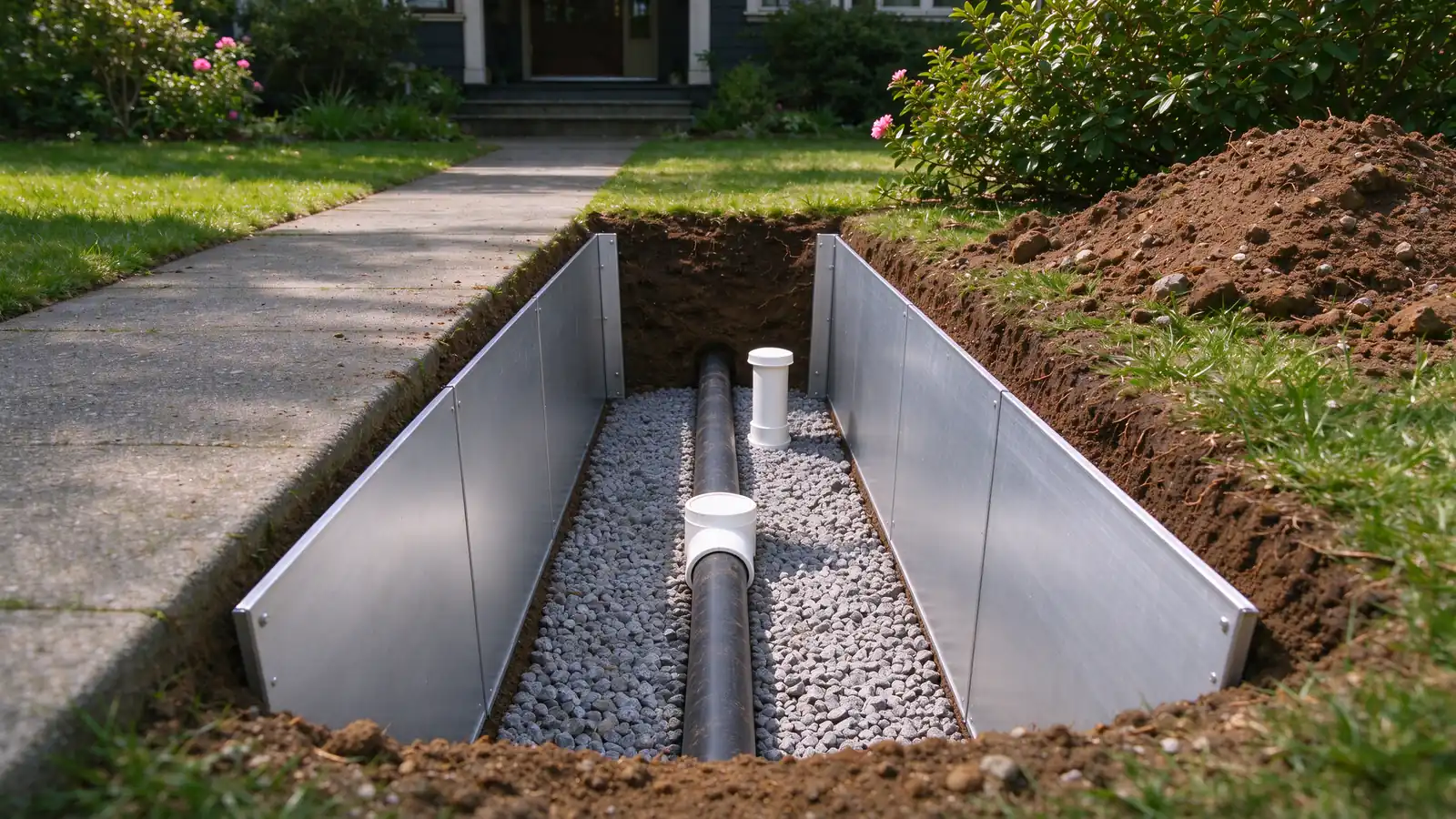
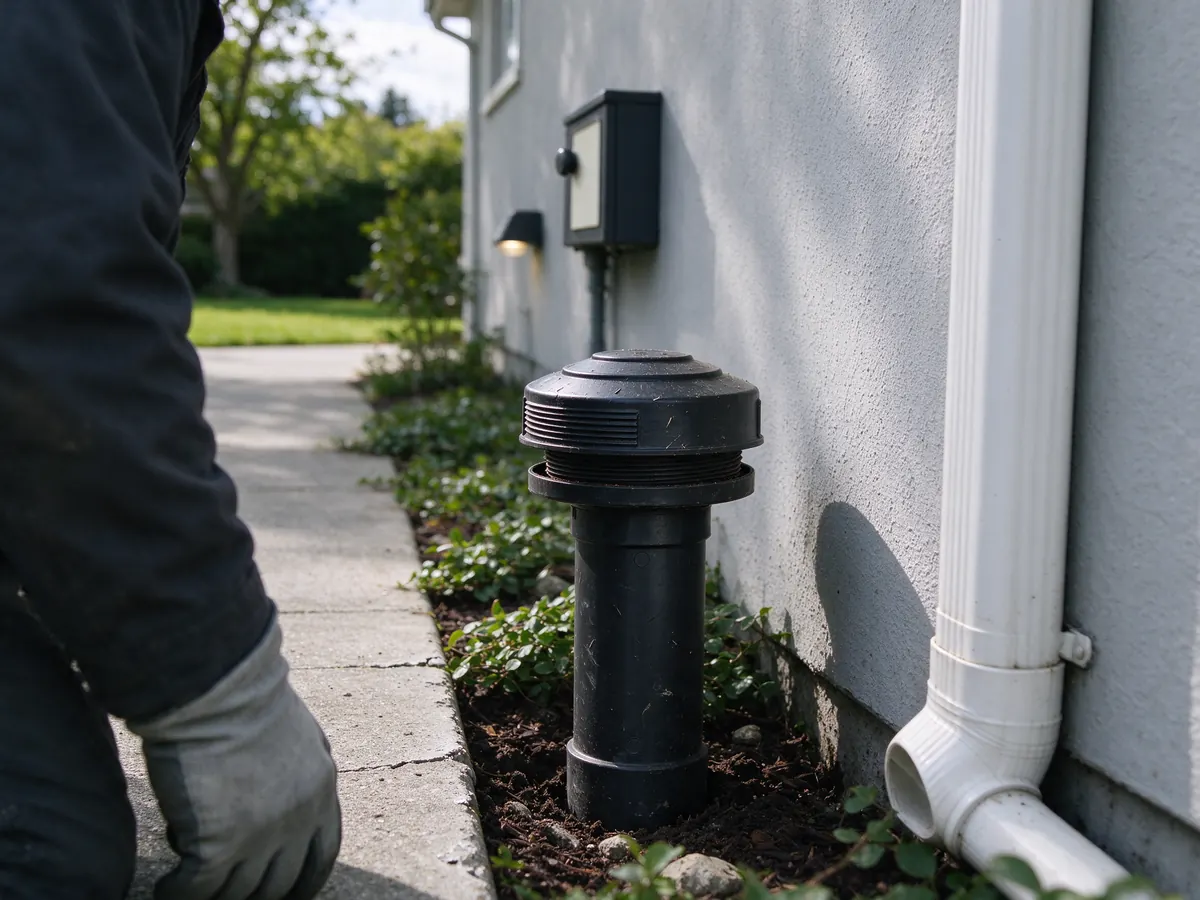
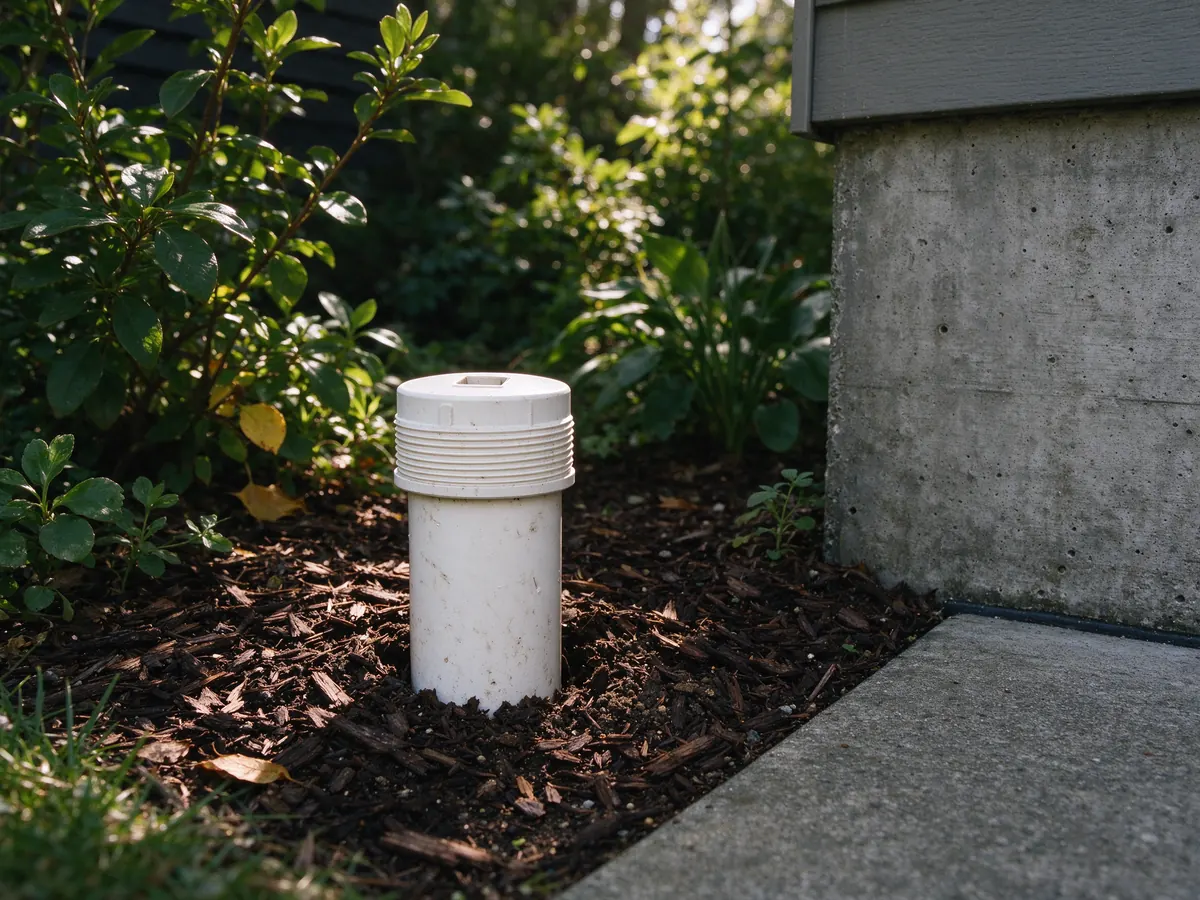
The cleanout usually includes an appropriate connection into the horizontal sewer and a riser or accessible opening terminating with a removable closure. These parts need to suit the approved installation. A vertical pipe standing in a yard does not establish how it connects below ground, whether it serves the sanitary sewer or whether equipment can travel in the required direction.
A failed cap, damaged riser and missing access point also describe different work. A cap problem may be limited to a fitting; a broken connection below ground can require opening the site. Define which component has failed before a proposal treats every access issue as a complete new installation.
Find the existing route before choosing the new position
Seattle side-sewer records can help identify historical routing and connections. They are a starting point, not proof that the present installation has the exact recorded position, depth or materials. Later alterations and partial repairs can leave a route that needs field confirmation before cutting into it.
A camera inspection and surface locate can help establish the relevant run where access and visibility allow. A camera footage counter records travel from its access. It does not independently measure the depth beneath the proposed cleanout or establish a property boundary.
The contractor needs to consider where the building drain exits, which direction future equipment should travel and whether a shared connection is involved. A cleanout installed on the wrong branch can leave the intended common run difficult to reach. Keep the selected route and the reason for the position in the scope, rather than relying on a mark in the lawn alone.
Make the access useful after the surface is restored
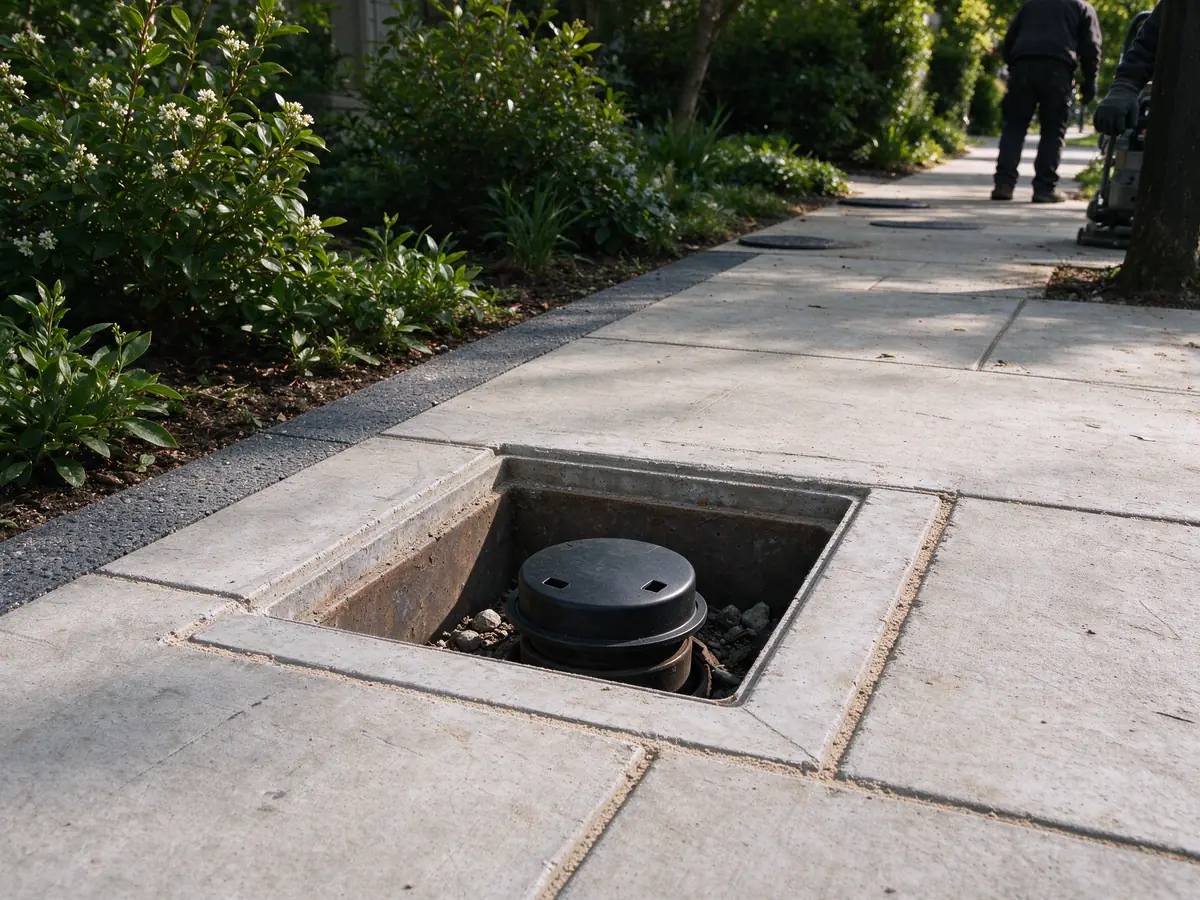
A good planning question is how the fitting will be reached after paving, landscaping or other work is finished. The cap should not disappear beneath a new slab, planting bed or stored equipment. Conversely, an exposed riser should not create an unnecessary obstruction in the agreed use of a path or work area.
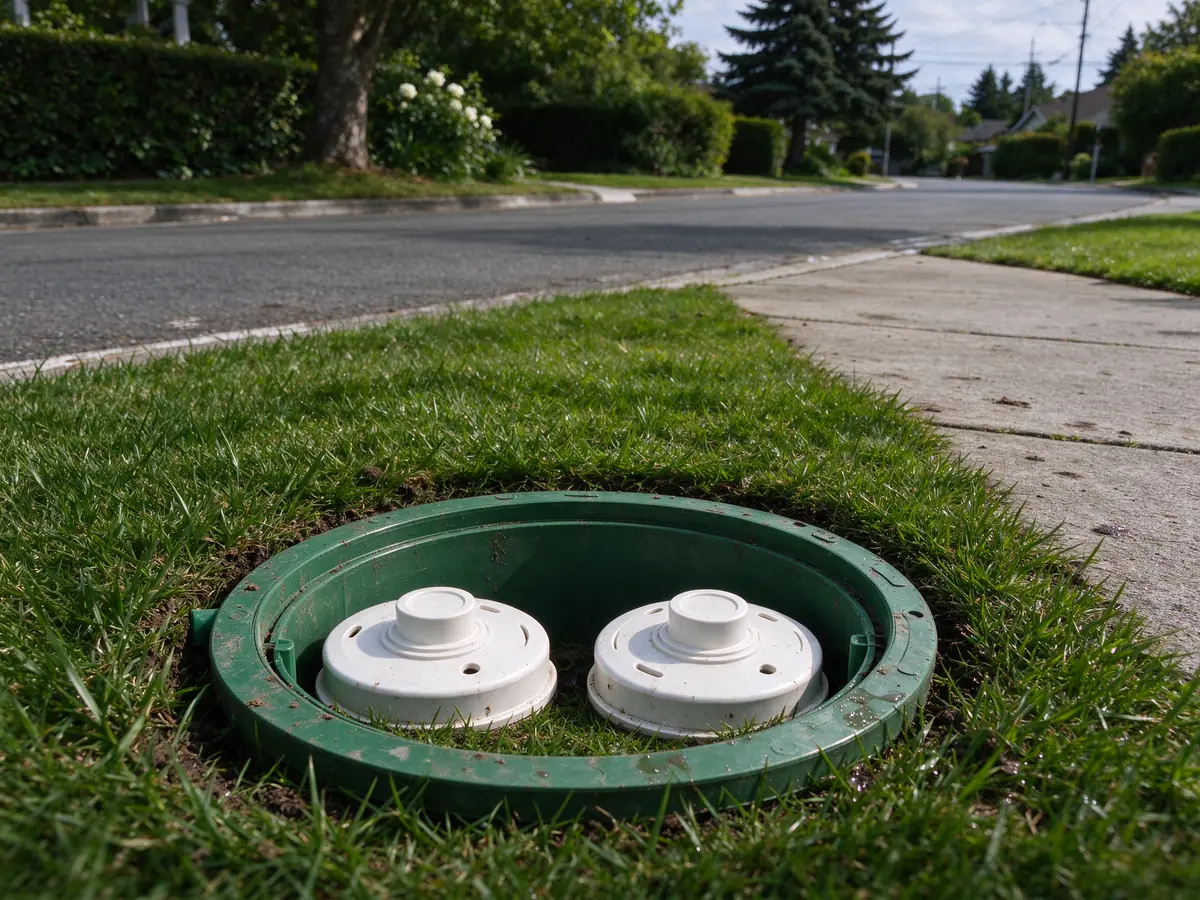
The finished level, protective box where appropriate, and surrounding surface should be part of the proposal. A flush access arrangement in paving has different details from a riser in an accessible planting area. The actual fitting, cover and installation must follow the requirements for that location, not a universal sketch copied from another property.
Consider the space needed around the opening as well. Equipment access and the operator’s working position can be affected by a narrow side passage, a gate or a retaining wall. Installing the cap close to a wall does not automatically make it convenient if the camera reel or cleaning equipment cannot be placed sensibly nearby.
The underground connection is the important part
Opening the site exposes the pipe that the new fitting must join. Its material, diameter and condition need checking. A suitable connection must be supported, correctly aligned and compatible with the retained pipe. A new access fitting should not be attached to a severely damaged section simply because that location is easiest to dig.
If the exposed sewer has an offset, deterioration or loss of shape, the contractor may need a documented scope decision before proceeding. A limited spot repair and cleanout installation can sometimes be combined where suitable. That does not mean a cleanout quote silently includes replacing an unknown length of defective lateral.
The riser and cap also need to remain supported as the opening is backfilled. Backfill, compaction and surface finish are separate from the visible cap, but they affect the completed access area. Ask how the work will be checked before concealed connections are covered and what completion information will be provided.
| Access problem | Scope question |
|---|---|
| Missing cleanout on the intended route | Where can a suitable directional connection be installed? |
| Broken or inaccessible closure | Is repair limited to the cap or does the riser also need work? |
| New paving over the route | How will the access remain usable at finished level? |
| Shared sewer branches | Which branch or common run will the fitting actually serve? |
| Deteriorated retained pipe | Is a defined pipe repair needed before making the new connection? |
Seattle permits and the building interface
A new cleanout is a sewer alteration, so the applicable approval pathway must be established before work. Seattle Public Utilities handles the side sewer permit process. Interior plumbing has a different regulatory interface. An access proposal near the building needs clear endpoints so those responsibilities are not blurred.
Work in the public right-of-way can also involve SDOT requirements, including excavation or staging. The private sewer can continue beyond the property line in Seattle, but that does not make every street-side fitting part of an unrestricted private scope. Confirm both the ownership and work location before selecting the contractor’s responsibilities.
The City’s rules also distinguish a camera recording from required installation checks. Where new sewer pipe longer than ten feet is included, SPU states that pressure testing is required. The actual permit and inspection requirements should be identified for the proposed alteration, rather than assuming that a clean camera image closes every approval item.
Costs follow the connection and restoration work
There is no verified flat Seattle cleanout-installation price used here. Depth, the retained material, equipment access, the type of finished surface and whether a damaged pipe must also be repaired can change the scope substantially. A shallow accessible connection in soil should not be compared with an installation beneath hardscape as though only the cap differs.
Ask for excavation, the fitting and transitions, backfill, permits, inspections and restoration to be identified. If the condition of the host cannot be fully established until opening, the proposal should explain how additional work is documented and authorized. An undefined allowance for “pipe as needed” is difficult to compare with a measured repair boundary.
For separate inspection context, an accessible standalone camera visit has a local planning range of $250–$500. That is not the price of installing access. The sewer cost guide explains the wider categories so cleaning, diagnosis and physical alteration are not combined into a misleading headline figure.
Access rights and records after installation
For a shared side sewer, the fitting’s location can affect more than one property. Identify who can authorize the work and whether the installation or future maintenance requires access across another parcel. A contractor’s drawing of the pipe does not create an easement or decide how connected owners allocate expenses.
After work, retain the new access location, the part of the lateral served and the applicable completion records with the existing sewer information. That record can help a future inspection begin at the right place. It should also state what pipe was retained and what, if any, defect remains outside the access-installation scope.
Get an Estimate for sewer cleanout installation with the property address, the reason access is needed and any existing recording or sewer card. If the route is uncertain, identify that uncertainty rather than choosing an excavation point from a guess. The installation should serve the sewer you need to reach.
What the scope should include
- Drain exit location and short route trace
- Named cleanout type, direction and materials
- Excavation and pipe connection details
- Riser, cap and finished-grade protection
- Permit and inspection steps that apply
- Surface restoration and a recorded location
How sewer cleanout installation compares with the alternatives
| Option | What it changes | What it leaves | Fits when |
|---|---|---|---|
| Exterior two-way cleanout | Adds access outside the building toward both house and street | Existing pipe defects | No usable outside access exists and service is recurring |
| Interior cleanout access | Uses or adds an access point inside the building | Equipment passing through living space | The building drain is reachable inside and outside space is limited |
| Removing a toilet for access | Gives a temporary entry point for camera or cable | Limited reach and a reset fixture each time | A one-off inspection where no cleanout exists |
| Cleanout added during a repair | Installs access while the pipe is already exposed | No separate dig later | A repair or replacement is planned anyway |
How sewer cleanout installation moves from inspection to record
- Locate the drainFind where the building drain exits and trace the line outward.
- Choose the positionSelect a location that is reachable, points the right way and avoids conflicts.
- Permit and excavateObtain the permit and expose the pipe with safe excavation.
- Install the fittingCut in a wye or two-way fitting and riser with a protected cap.
- Restore and recordBackfill, finish the surface and note the cleanout location for later service.
What this work looks like
Questions about this work
Will one new sewer cleanout reach every branch beneath a property?
Not necessarily. Its position and fitting direction determine the route it serves. Separate branches or a shared connection can leave portions requiring another access strategy.
Can a damaged cleanout cap be handled separately from a new installation?
Sometimes the defect is limited to the closure, but a damaged riser or underground connection is a different scope. The assessment should identify the actual failed component before defining the repair.
What should be decided about a cleanout before repaving?
Confirm its finished elevation, protection and accessibility. A fitting that becomes buried or obstructed after paving may no longer provide the intended inspection and maintenance access.
Do old sewer cards establish the cleanout excavation depth?
No. Historical records help trace the installation, but the route and depth still need appropriate field confirmation. A drawing is not proof that no later alteration occurred.
Can a cleanout be added to badly deformed Orangeburg?
The retained pipe must be suitable for the proposed connection. Severe deformation can change the scope to pipe replacement rather than a fitting attached to an unsuitable host.
Does installing access also certify the remaining lateral?
No. A new fitting and its defined connections do not establish the condition of every retained section. Any inspection should state what it reached and what remained outside the assessment.
Why specify which direction a cleanout serves?
The connection geometry affects where a camera or cleaning equipment can travel. Useful access depends on reaching the intended run, not merely having a removable cap.
What completion record is useful for a newly installed cleanout?
Keep its location, served route, installed work boundaries and applicable permit closeout information. Include any available inspection record without treating it as a warranty for retained pipe.