
Last Updated:
What happens on the first visit
- Is the host pipe a candidate?The camera checks whether the existing pipe is continuous, holds its shape and sits on acceptable grade, and records bends, diameter changes, branch connections and offsets. Any of these can rule lining out or change how it is installed.
- What to have readyHave earlier camera video and any notes on bellies or offsets found before. Know where cleanouts are and whether branch lines or a neighbor's line connect to the run, since each connection needs reinstating after the liner cures.
- What the visit cannot confirmLining suitability often cannot be settled until the pipe is cleaned and inspected again. A liner seals cracks and joints but follows the host, so a belly stays a belly and a collapsed section must be repaired first.
- The written lining scopeThe scope states the lined length and endpoints, cleaning and preparation, liner and resin system, how branch connections are reinstated, access points, cure method, how long sewer use is unavailable, the permit path and the post-lining camera inspection.
Sewer pipe lining in Seattle forms a new interior lining within an existing lateral that is suitable for rehabilitation. The decision starts with the host pipe, not with a promise to avoid every excavation. Its shape, alignment, accessible length and connections determine whether lining addresses the condition found.
Douglas Sewer Line Repair Seattle provides private sewer rehabilitation and related repair planning, with work performed by fully licensed and insured contractors. A lining proposal should explain the preparation, installed endpoints and limitations clearly enough to compare with a localized repair or replacement. A smooth new interior is useful only when it solves the relevant problem.
What CIPP changes inside the sewer
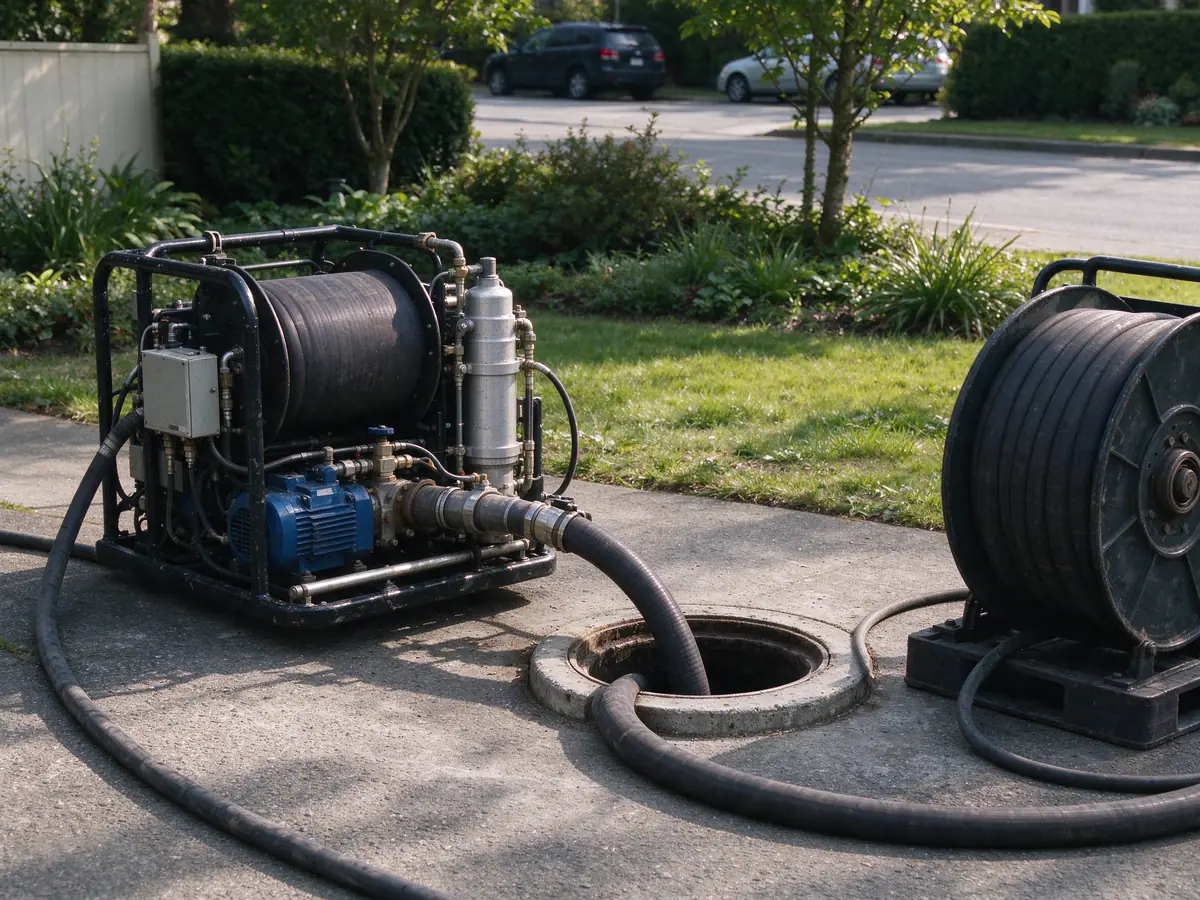
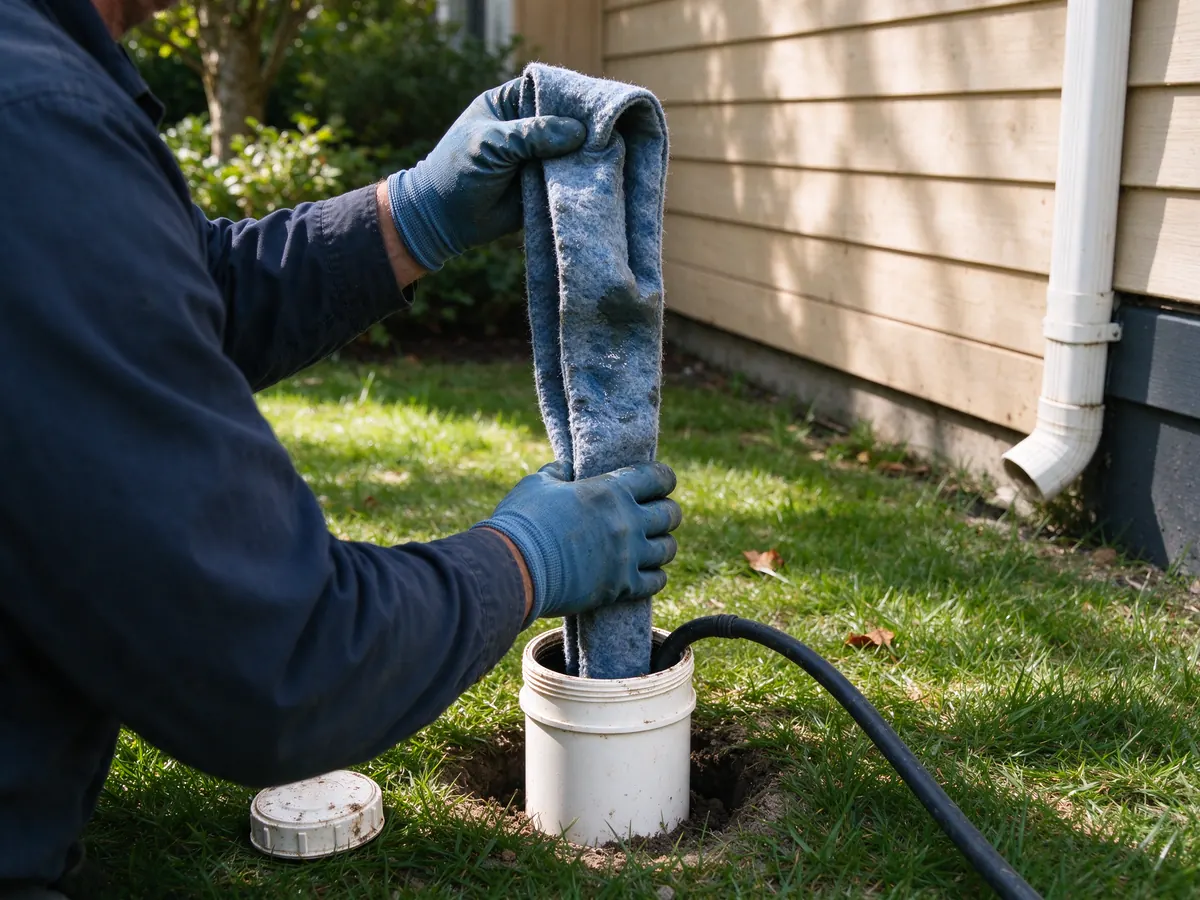
Cured-in-place pipe, usually shortened to CIPP, uses a resin-bearing liner installed into a prepared host pipe and cured through the process selected for that system. The resulting lining renews the interior along the treated section. It is different from replacing the pipe by open excavation or pulling a replacement through the old route.
The host’s geometry still matters. Lining does not create a new trench profile, lift a low section or remove every structural constraint outside the pipe. The proposed system, installation method and treatment limits should be identified in the scope. An unspecified “epoxy repair” does not tell the customer which part of the lateral will be treated or how connected branches will be handled.
A usable camera assessment comes before a lining recommendation
The inspection should establish the visible pipe material, access, route changes and extent of the affected run. Roots and deposits can obscure the wall. Where preparation is needed to evaluate the host, the contractor should distinguish the first inspection from the findings after suitable cleaning. A recording made through substantial standing water can leave important questions unanswered.
Keep the access point and footage distances with the recording. The camera’s travel distance is not automatically the horizontal distance across the yard. Surface locating can relate a finding to the ground above it, while utility records help explain the connection. If an obstruction prevented a complete assessment, the proposal should state that limit rather than describe the unseen remainder as approved for lining.
Cleaning is a controlled preparation step
A liner needs a host condition suitable for the chosen system. Root cutting, deposit removal and cleaning may therefore be part of preparation. The method must suit the known pipe condition; a weakened wall or damaged joint is not a reason to use force indiscriminately. Preparation can also reveal defects that were hidden in the initial recording.
Ask how those findings affect authorization. A clear scope explains what happens if preparation reveals a host that cannot accept the proposed liner. That is more useful than treating every change as an unexpected emergency after equipment arrives. Cleaning can restore flow without closing the original entry defects, while lining is a separate rehabilitation decision that requires its own justification.
A belly and a deformed wall are separate concerns
A confirmed low section is a grade problem. A liner normally follows that profile, so it should not be presented as lifting a sag or restoring the slope of a settled run. If water remaining in the pipe affects the decision, ask how the condition was interpreted and what the proposed work changes.
Loss of roundness or continuity can also restrict rehabilitation. A badly deformed or collapsed section may need localized excavation before any suitable remaining pipe is lined, or it may support a broader replacement. Combining methods can be reasonable when each part has a clear purpose. The customer should be able to see why an access repair is included rather than learn about it after accepting a supposedly excavation-free price.
| Question about the host | Why it matters for lining |
|---|---|
| Can the full intended section be inspected? | Unseen pipe remains an uncertainty, not an approved lining candidate. |
| Is the host shape suitable? | Deformation or collapse can change the feasible scope. |
| Does the route retain a low section? | An interior liner does not raise the existing profile. |
| Where do branches enter? | The proposal must preserve or appropriately restore the intended connections. |
| Can the installation equipment reach the access? | Preparation and insertion need a practical work area. |
Treat terminations and branches as part of the work
The useful length of a liner is defined by its actual installed endpoints. Ask where it begins relative to the building and where it ends relative to the public-main connection. A quote for the exterior lateral does not automatically include interior drainage or a separate branch beneath a slab. Transitions at the ends deserve attention because the retained pipe remains part of the system.
Connected branches need a specific plan. The contractor should identify them before installation and explain how their openings are handled by the selected process. A post-installation recording can document the visible result, but a recording of one main run does not establish the condition of every side branch. Those limits should remain with the final documents.
Price the installed scope rather than guessed footage
A Seattle-area installed CIPP lateral planning range is $7,000–$21,000. A broader published local footage band is $104–$325 per linear foot. They are budgeting context, not Douglas rates or interchangeable ways to calculate a property’s price. A guessed length multiplied by a footage rate can omit substantial preparation and access work.
Ask whether the proposal includes cleaning, locating, access excavation, connection treatment, permit coordination, inspection and surface restoration. Confirm how unsuitable host conditions or additional connections are handled. The lining cost guide separates the components so a lining proposal can be compared with a repair that solves the same defect and covers the same endpoints.
Seattle permits and funding need their own checks
The SPU side sewer permit guidance is the starting point for Seattle approvals. Street access or staging can introduce a separate right-of-way requirement. Reducing trench length does not remove the need to establish the applicable permission and inspection pathway for the actual installation.
Seattle’s income-qualified side sewer assistance is not a general liner subsidy. The program excludes liner-only work, routine clearing and jetting. If funding affects the decision, confirm the program’s process directly before authorizing work rather than assume a lining quote will qualify. Insurance is also policy- and cause-specific; a contractor’s technical recommendation does not decide coverage.
Keep the installation and use restrictions understandable
Preparation, insertion, curing and verification may require restrictions on sewer use. The contractor should explain the planned interruption before work starts, including how connected homes or occupied commercial spaces are affected. Do not infer a fixed completion time from the word trenchless. The host condition and actual process control the work sequence.
At completion, retain the treated endpoints, method and available recording with the permit closeout information. Ask what retained pipe remains outside the lined section and what maintenance advice applies to it. Any contractual warranty should identify the responsible party and its terms separately; a camera recording is evidence of visible condition, not a blanket guarantee about the entire sewer system.
Get an Estimate with the property location and complete inspection materials. You can ask about lining without committing to it. The assessment should establish whether rehabilitation is a suitable answer to this pipe’s condition and explain the alternatives when it is not.
What the scope should include
- Pre-lining camera inspection of the host
- Cleaning and preparation scope
- Named liner and resin system and lined length
- Branch connection reinstatement
- Permit path and stated sewer-use interruption
- Post-lining camera inspection record
How sewer pipe lining compares with the alternatives
| Option | What it changes | What it leaves | Fits when |
|---|---|---|---|
| Full-length CIPP lining | Forms a jointless pipe inside the host from end to end | Bellies and grade; the liner follows the host | The host holds shape, defects are cracks or joints and grade is acceptable |
| Sectional point liner | Lines a short defined section | The rest of the run | One crack or leaking joint in otherwise sound pipe |
| Pipe bursting | Replaces pipe along the old route at the same or larger size | The old route's grade | The host is too damaged to line but the route is continuous |
| Excavated replacement | New pipe on a corrected slope or route | More surface disturbance to restore | Bellies, collapses or severe offsets rule out lining |
How sewer pipe lining moves from inspection to record
- Inspect the hostConfirm shape, continuity and grade on camera before committing to lining.
- Clean and prepareRemove roots, scale and debris so the liner bonds to a clean wall.
- Measure and installMeasure the run, wet out the liner and install it through access.
- Cure and reinstateCure the liner, then reopen any branch connections.
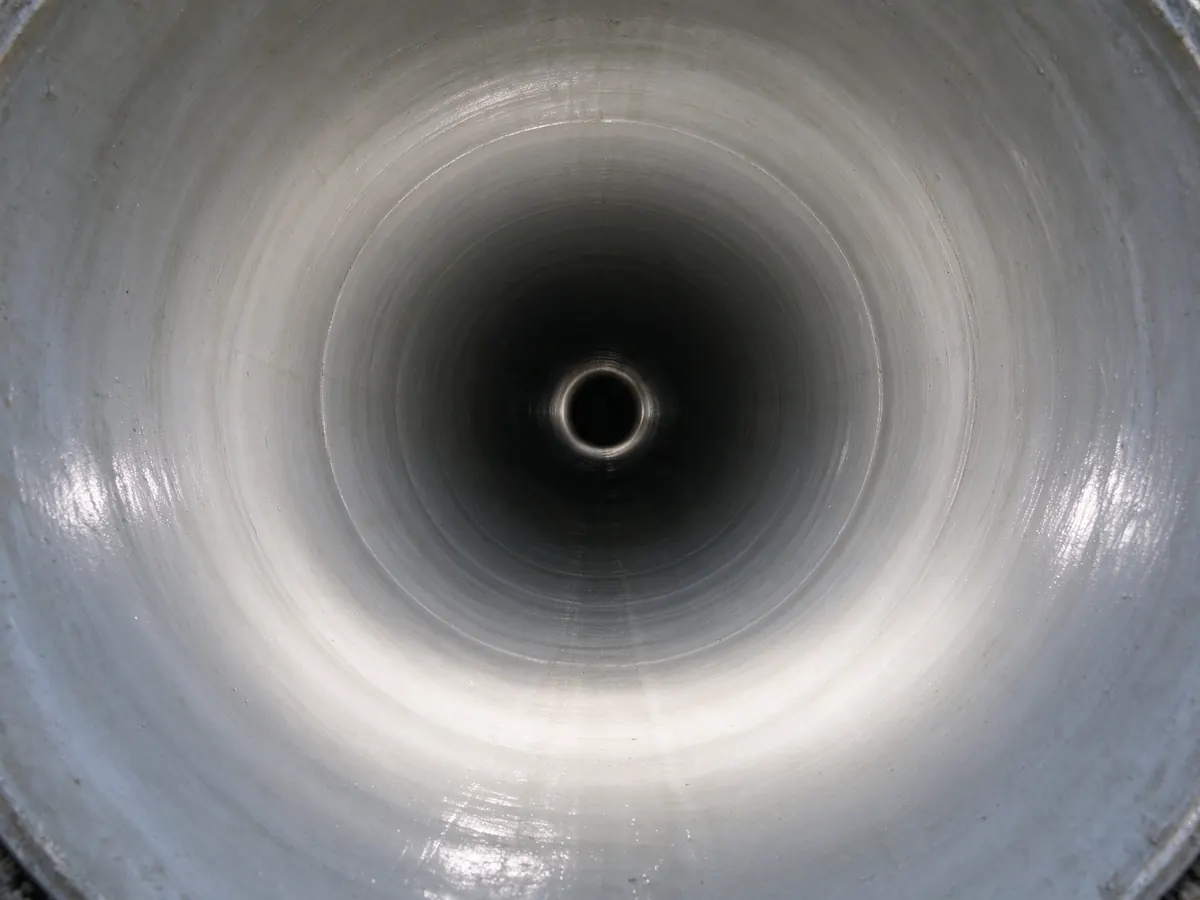
- Verify on cameraInspect the finished liner for wrinkles, gaps and reinstated connections.
What this work looks like
Questions about this work
Does CIPP lining remove the old sewer pipe?
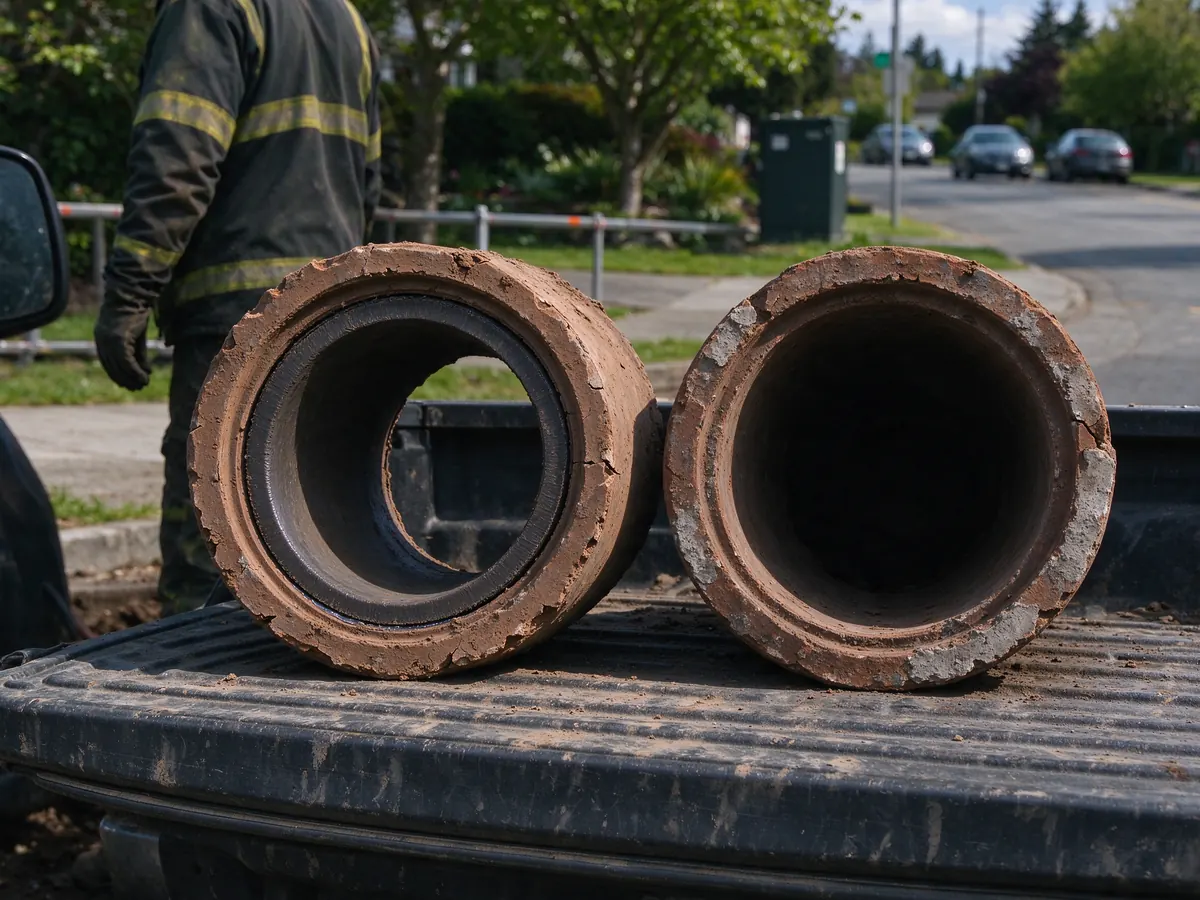
No. The liner is installed inside a suitable host, which remains in the ground. It is rehabilitation rather than removal and replacement, so the condition and geometry of that host still matter.
Can cleaning prove that a host pipe is suitable for a liner?
Cleaning can improve visibility and prepare a candidate pipe, but it can also reveal additional defects. Suitability depends on the resulting condition, route, access and proposed system rather than the fact that cleaning occurred.
What happens to a branch opening along a lined lateral?
It needs to be identified and addressed by the proposed installation process. Ask how the intended connection remains functional and what post-work evidence will show, rather than assume branches require no treatment.
Will a liner change the elevation of a settled pipe section?
A liner follows the existing profile. If correcting a low section is part of the needed result, the plan must explain separate grade or support work rather than claim that a new interior automatically lifts the pipe.
Why can a lining quote include access excavation?
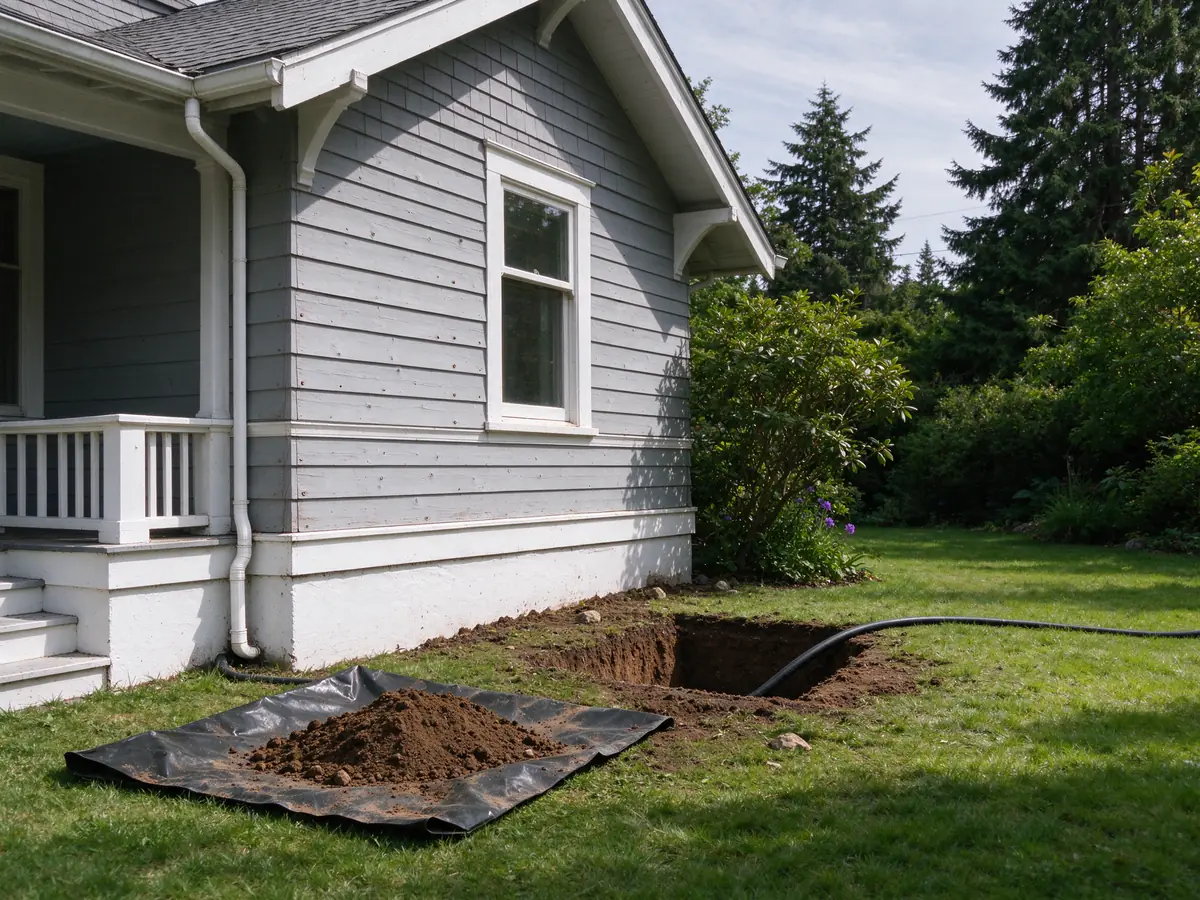
The process needs practical access for preparation, installation and connections. Existing openings may not provide it. The proposal should identify any pits or surface openings and the restoration they require.
Can Seattle side sewer assistance be assumed to cover liner-only work?
No. The City’s program excludes liner-only work and has its own eligibility and application process. Confirm the available pathway directly before authorizing a project that depends on public assistance.
Does a local per-foot lining range include every installation cost?
Not necessarily. Preparation, access, branch handling, permits and other components may not scale with length or may be excluded. Use the figure as budgeting context and confirm the complete installed scope.
What records should accompany a finished lined section?
Keep the treated endpoints, system and method description, available recording and applicable permit closeout information. Ask which retained sections remain outside the work and keep any warranty terms as a separate contractual document.