
Last Updated:
What happens on the first visit
- What sits over and around the lineThe visit marks the sewer route and approximate depth, then records what lies above and beside it: hardscape, trees, structures, retaining walls and other utilities. Whether any of the work is in the street or sidewalk is also checked.
- What to have readyHave the camera findings that led to excavation, any sewer card or as-built, and notes on sprinkler lines, low-voltage wiring and other private services utility locators will not mark. Mention any slope, wall or drainage concerns near the route.
- What the visit cannot confirmDepth, soil conditions, groundwater and unmarked buried lines can only be confirmed as the ground is opened. The visit cannot fix the final trench length if the pipe beyond the known defect has not been inspected, and the scope should say so.
- The written excavation planThe plan names the trench or pit locations and length, trench protection for any entry, utility locating steps, permit and right-of-way needs, spoil handling, bedding and backfill, the surfaces to be restored and the inspection before backfill.
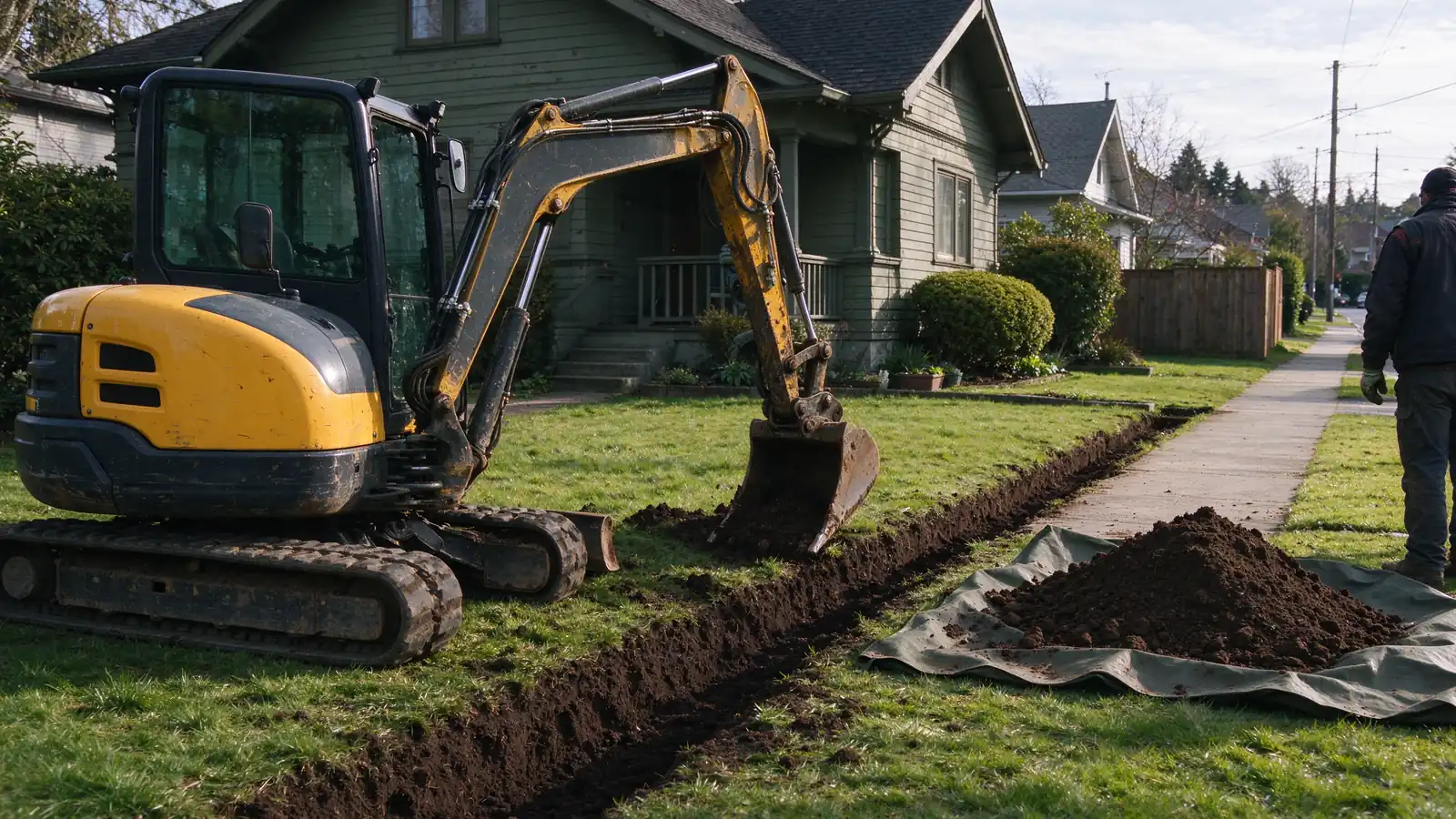
Sewer excavation in Seattle provides direct access to a private lateral when the pipe, its alignment or its connections need work that cannot be accomplished from an existing opening alone. The digging is only one part of the scope. Utilities, protective measures, pipe support, inspections and restoration determine how that access becomes a completed repair.
Douglas Sewer Line Repair Seattle plans open-access sewer repair and replacement, with work performed by fully licensed and insured contractors. The work should be defined around the actual route and condition. A general promise to dig and replace pipe does not explain which surfaces will open or how the installation will be supported and closed out.
When direct access changes what can be repaired
Open excavation can expose a collapsed section, allow a damaged connection to be replaced or provide access to correct an affected alignment. It is especially relevant where the repair needs to change support or a low pipe profile. Renewing the wall internally and changing the route’s grade are different results, so the method should follow the intended correction.
Excavation does not always mean opening the whole lateral. A localized repair may need access at one defined defect, while a broader replacement can require a longer work route. Some projects combine an open correction with a suitable trenchless method elsewhere. Ask why each opening is needed and which portion of the final result it supports.
Locate the route before defining the opening
An existing sewer card can suggest the historical installation. A camera recording adds visible condition and travel distances from its access. Neither should be treated as an exact excavation drawing without relating it to the property. Bends, undocumented repairs or a cleanout offset from the building can separate the footage counter from a straight-line measurement across a yard.
Locating helps connect the target to a surface position and depth investigation. The proposal should identify the work endpoints and the area expected to open. Where a structure, retaining wall or driveway sits near the route, clarify how the work can be reached without assuming that a short pipe distance guarantees a small surface footprint.
The access route is part of the project
A mini excavator needs a practical route to the work area and stable space to operate. Some properties have a narrow side passage, fences or hardscape that limits equipment access. Others need a different material-handling plan because the target lies beneath an occupied building or close to a public street. Describe those constraints at the estimate stage rather than leave them for the arrival of equipment.
The contractor should identify where excavated material, equipment and replacement components will be placed. The written scope can distinguish temporary disturbance from surfaces intended for final restoration. Photographs taken from safe ground can help explain access, but the customer should not enter a work opening or remove a barrier to obtain a closer picture.
Protective systems and utility coordination are contractor work
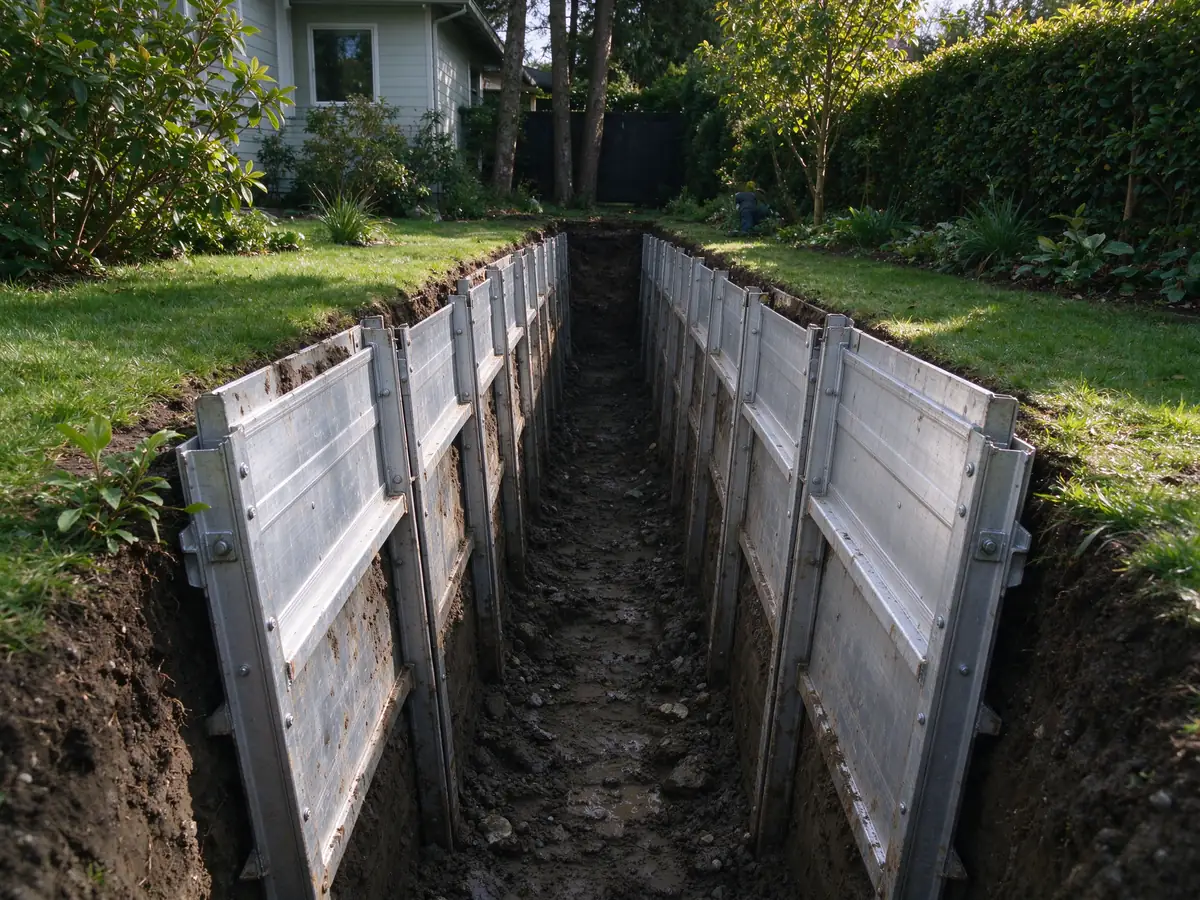
Excavation presents serious hazards, including unstable ground and buried services. The OSHA trenching resource is a useful explanation of why protective planning cannot be treated as an optional accessory to pipe work. The contractor must determine the protective measures and safe access appropriate to the actual excavation and conditions.
A sewer route mark does not locate every other utility or make it safe to dig. The applicable utility-location process, clearances and any additional coordination belong before excavation. Keep people away from the opening and equipment area. Never enter a trench to inspect a pipe, retrieve an item or judge whether the soil appears stable; visual appearance is not a safe entry decision.
| Part of excavation work | What the proposal should define |
|---|---|
| Work route and endpoints | Which pipe and connections are included, and why |
| Access and staging | Equipment route, material storage and occupied-property arrangements |
| Protective measures | Responsibility for the excavation safety plan and required controls |
| Replacement installation | Pipe specification, transitions, bedding and alignment work |
| Approval sequence | Permits, required inspections and checks before covering |
| Restoration | Backfill, compaction, finish boundaries and provisional allowances |
Bedding and alignment are not cosmetic details
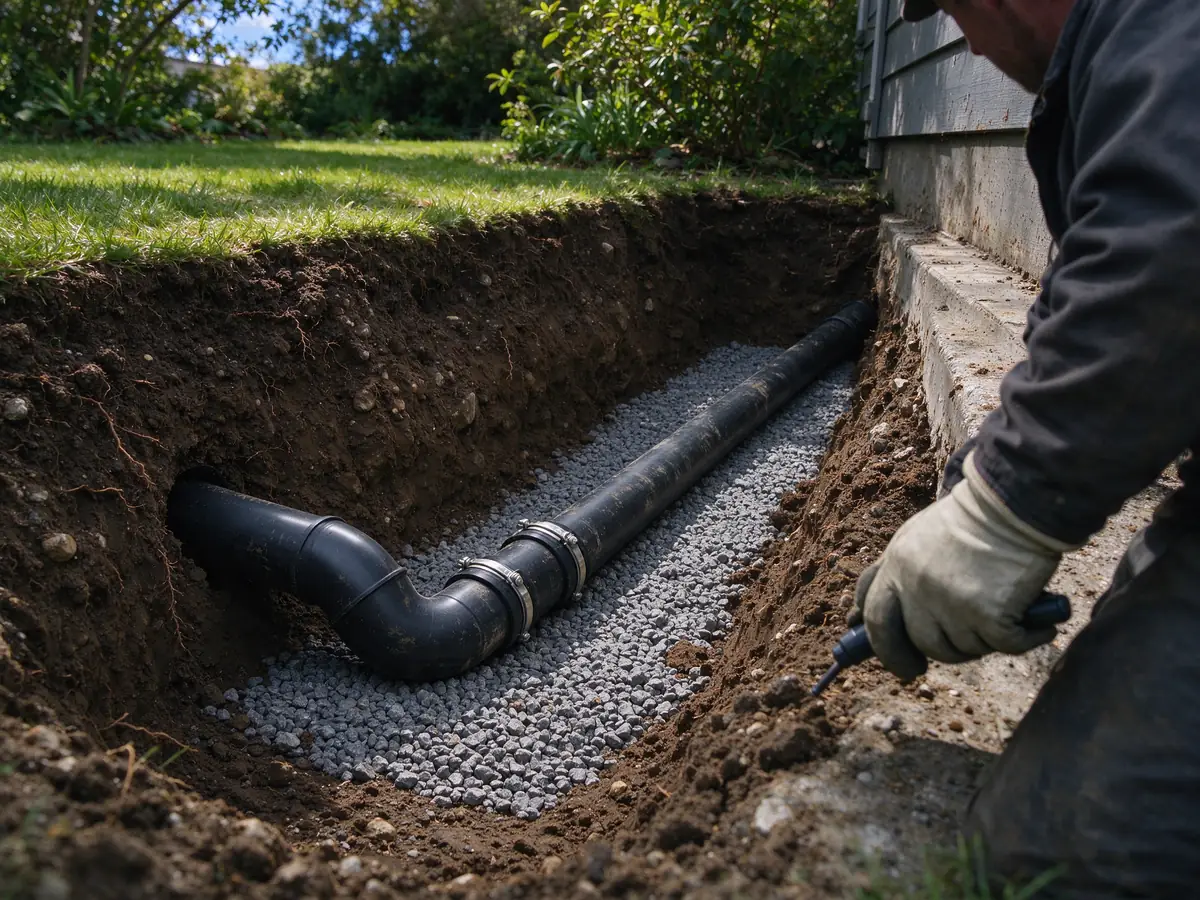
The new sewer needs support appropriate to its installation. A replacement section resting unevenly or left with an unsupported transition can create a problem even if the pipe material itself is sound. The work scope should explain whether the intended result includes a change to the affected grade or simply replacement along the existing route.
A low section deserves particular clarity. If a belly repair is part of the recommendation, identify the limits of the correction and how it connects to retained pipe. A newly installed section must still join the rest of the system. Ask how changes discovered after opening will be evaluated before an assumed short correction expands into a much larger replacement.
Seattle permits follow the location and scope of work
Seattle Public Utilities handles the side sewer permit pathway. Work affecting the public right-of-way can also involve Seattle Department of Transportation approvals. An excavation or staging area near a sidewalk should therefore be evaluated by its actual footprint rather than assumed to be entirely private-yard work.
Private responsibility in Seattle can continue beyond the lot boundary toward the public-main connection. Establish the endpoint and ownership before deciding which party authorizes a street-side repair. Interior plumbing has a different regulatory interface, and other cities or districts can use different processes. The proposal should identify the applicable authority for the actual address, including inspections and closeout responsibilities.
Checks need to happen before covered work disappears
The installation plan should identify the applicable inspections and tests before the pipe becomes inaccessible. SPU states that new sewer pipe longer than 10 feet requires pressure testing. A camera pass can document visible interior condition but does not replace an applicable test or authority inspection. Those forms of verification answer different questions.
Keep the completion records focused on the work actually done: repaired route, endpoints, retained connections, required approvals and available verification footage. A permit closeout for a limited repair does not establish the condition of every private drain on the property. That distinction is useful when the repair sits close to an older branch or when only part of a shared system was renewed.
Backfill and surface finish need separate boundaries
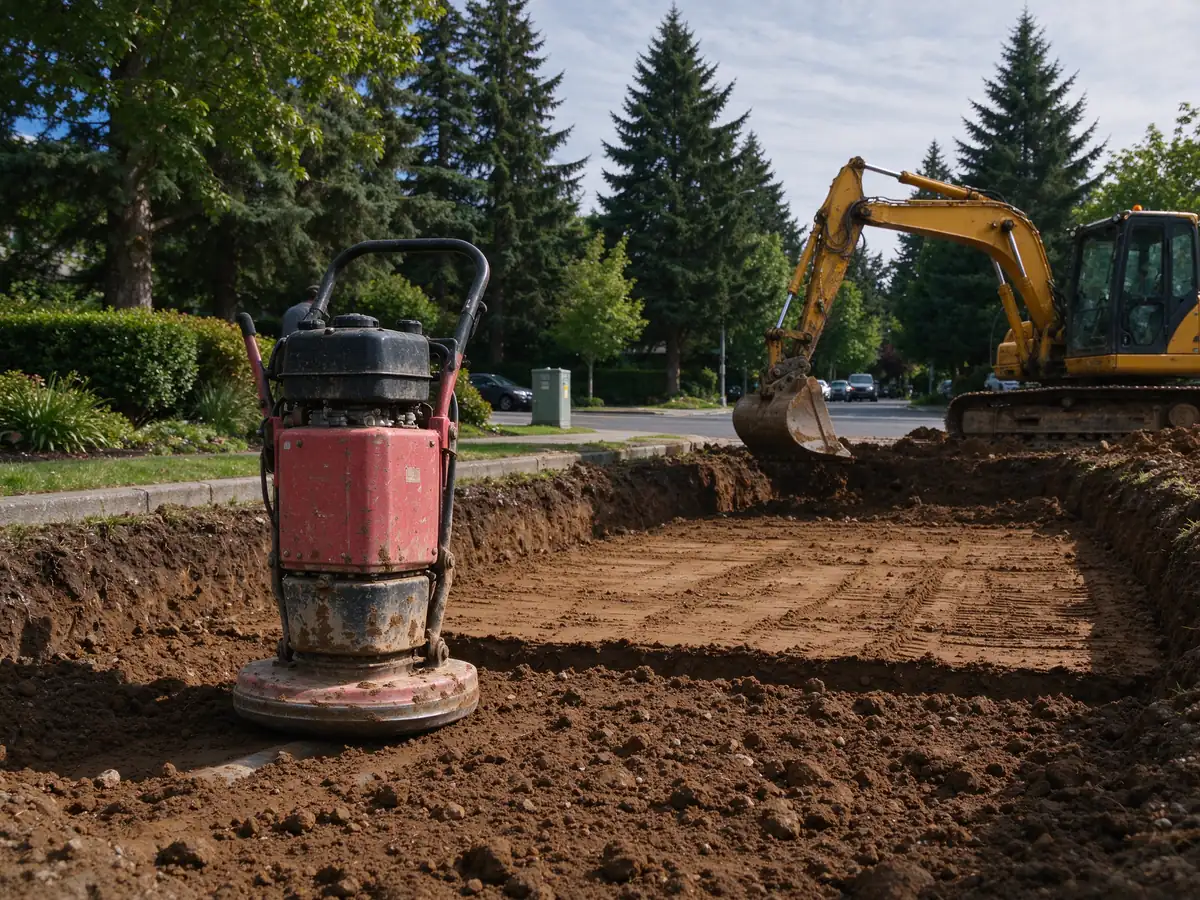
Restoration starts below the visible finish. The proposal should address handling of excavated material, appropriate backfill and compaction, not just promise a strip of new paving over the trench. Lawn, planting, concrete and a public street involve different restoration scopes. Ask who is responsible for each part and what happens if an allowance changes after opening.
A provisional amount should be recognizable as provisional. Identify the affected surface boundaries and expected finish rather than assume every disturbed landscape feature will be reconstructed. The restoration guide helps separate access to the pipe from the work needed above it, which makes bids easier to compare without reducing the discussion to pipe length alone.
Budget against a defined repair category
There is no verified Seattle-wide excavation-only price that fits every sewer opening. A localized spot-repair planning band is $1,950–$8,800, while complete lateral replacement has a broader $13,000–$41,600 range. These describe different work categories, not a daily equipment rate or a Douglas quote. Street work, depth, access and substantial restoration can move a project outside them.
Ask what inspection, locating, permits, hauling and surface work the number includes. If insurance is relevant, confirm the specific coverage and required documentation with the carrier before relying on payment. Get an Estimate with the complete recording and the access details you know. A useful excavation proposal explains the route to a finished repair, including what will be exposed, changed, checked and restored.
What the scope should include
- Route and depth marking with utility locates
- Stated trench or pit locations and length
- Trench protection for any worker entry
- Side sewer and right-of-way permits that apply
- Bedding, compacted backfill and named restoration
- Inspection before backfill and a final record
How sewer excavation compares with the alternatives
| Option | What it changes | What it leaves | Fits when |
|---|---|---|---|
| Open-trench excavation | Exposes the pipe for replacement with new bedding and slope | Surface restoration, priced as its own line | Grade must change, collapses exist or trenchless access fails |
| Spot excavation | Opens one pit at a located defect | Pipe outside the pit | A single located defect sits in otherwise sound pipe |
| Pipe bursting | Uses launch and receiving pits instead of a full trench | The original route and grade | The route is continuous, grade is acceptable and pits are workable |
| CIPP lining | Works through cleanouts or small access pits | Bellies and severe offsets | The host pipe is intact enough to hold a liner |
How sewer excavation moves from inspection to record
- Mark route and depthLocate the sewer and request utility locates before any digging.
- Plan the openingSet trench or pit length and the protection any entry requires.
- Permit and digObtain side sewer and right-of-way permits and excavate safely.
- Inspect before backfillLet the required inspection see the pipe, bedding and connections.
- Backfill and restoreCompact backfill in lifts and restore the named surfaces.
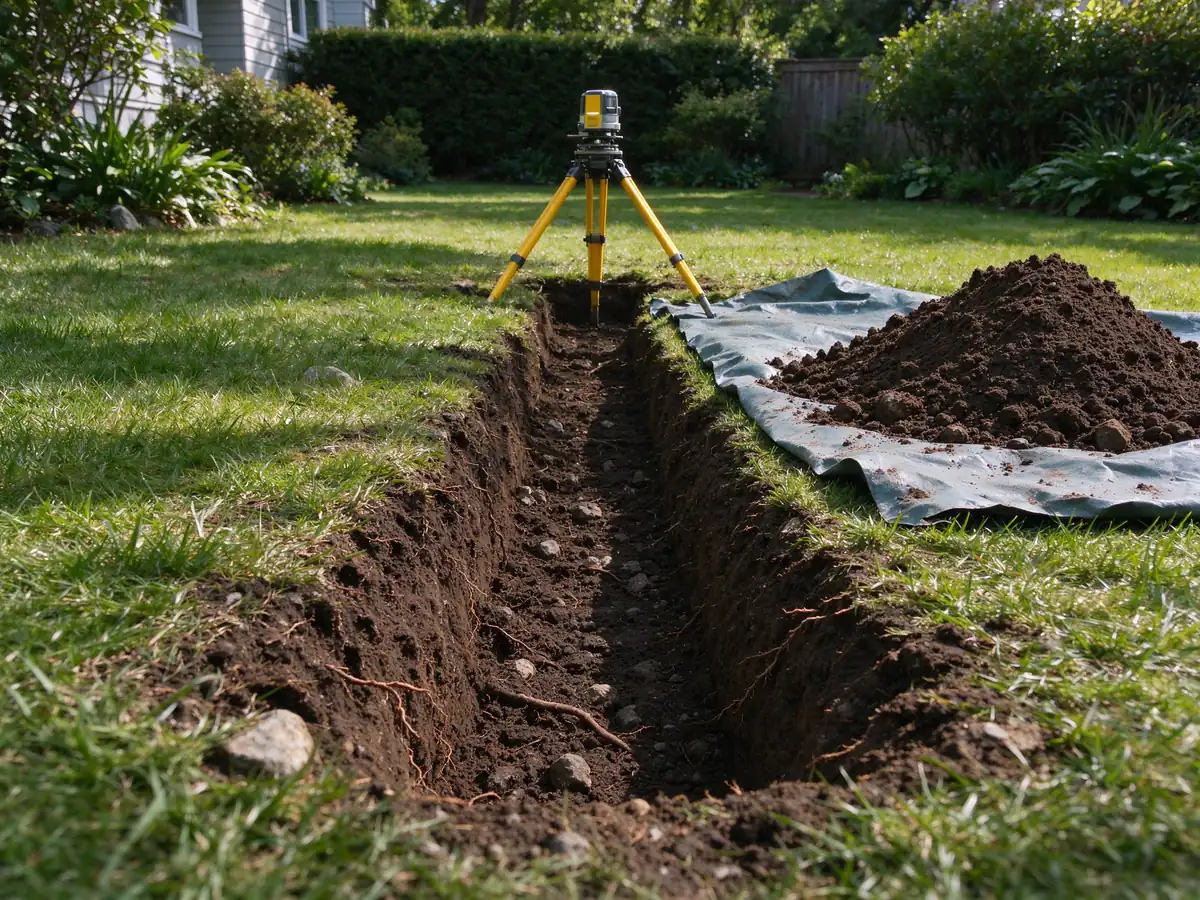
What this work looks like
Questions about this work
Does sewer excavation always mean digging the entire lateral?
No. Direct access may be limited to a defined defect or used alongside a suitable trenchless method. The work route and each opening should follow the condition and intended correction rather than a universal excavation length.
Can a homeowner enter a sewer trench to inspect the proposed repair?
No. Excavations can be hazardous even when the soil looks stable. Keep out of the opening and equipment area; assessment of protective measures and safe access belongs to qualified people responsible for the work.
Why is a sewer route mark insufficient permission to start digging?
It does not identify every other buried utility, establish access rights or replace the applicable approvals and protective plan. Locating supports excavation planning but is only one part of the work sequence.
What makes sewer-trench bedding part of the repair?
The installed pipe and its transitions need appropriate continuous support. Renewing a pipe wall while leaving an unresolved local support or profile problem can fail to address the condition behind the recommendation.
Why should backfill and paving be separate items in an excavation scope?
The visible surface does not describe the ground support beneath it. Ask about material handling, backfill and compaction as well as the finish boundaries and the party responsible for each component.
Is there one Seattle excavation-only rate that covers any lateral repair?
No universal rate is asserted here. The available regional bands describe localized repair or complete replacement scopes, with actual depth, access, utilities, street work and restoration still to resolve.
Can an exterior sewer excavation automatically include interior plumbing work?
No. The work has defined endpoints and regulatory interfaces. Building drainage or under-slab work needs to be identified in the proposal rather than assumed to be included with an exterior lateral repair.
What must be settled before a sewer trench is covered?
The applicable inspection and testing sequence should be coordinated while the work is accessible. Keep the installed endpoints, required approval records and available verification footage with the final scope.