
Last Updated:
What happens on the first visit
- Finding the joinThe camera traces each property's branch to the point where they meet and continues along the shared section toward the public connection. Defects are recorded by distance from the join, so it is clear whose pipe they sit in.
- What to have readyHave any recorded easement, joint-use agreement or sewer card showing the shared line, and contact details for the other owners. Note which properties have had backups and when, and where access to the shared pipe sits.
- What the visit cannot decideCamera findings show where a defect is, not who must pay for it. Responsibility follows recorded agreements and utility rules, and an equal split is not automatic. Work on another owner's land also needs their access consent.
- What comes in writingThe proposal states which section is being repaired, its endpoints relative to the join, the method, access needed on each property, permit and easement steps, restoration on each lot and the inspection record shared with all owners.
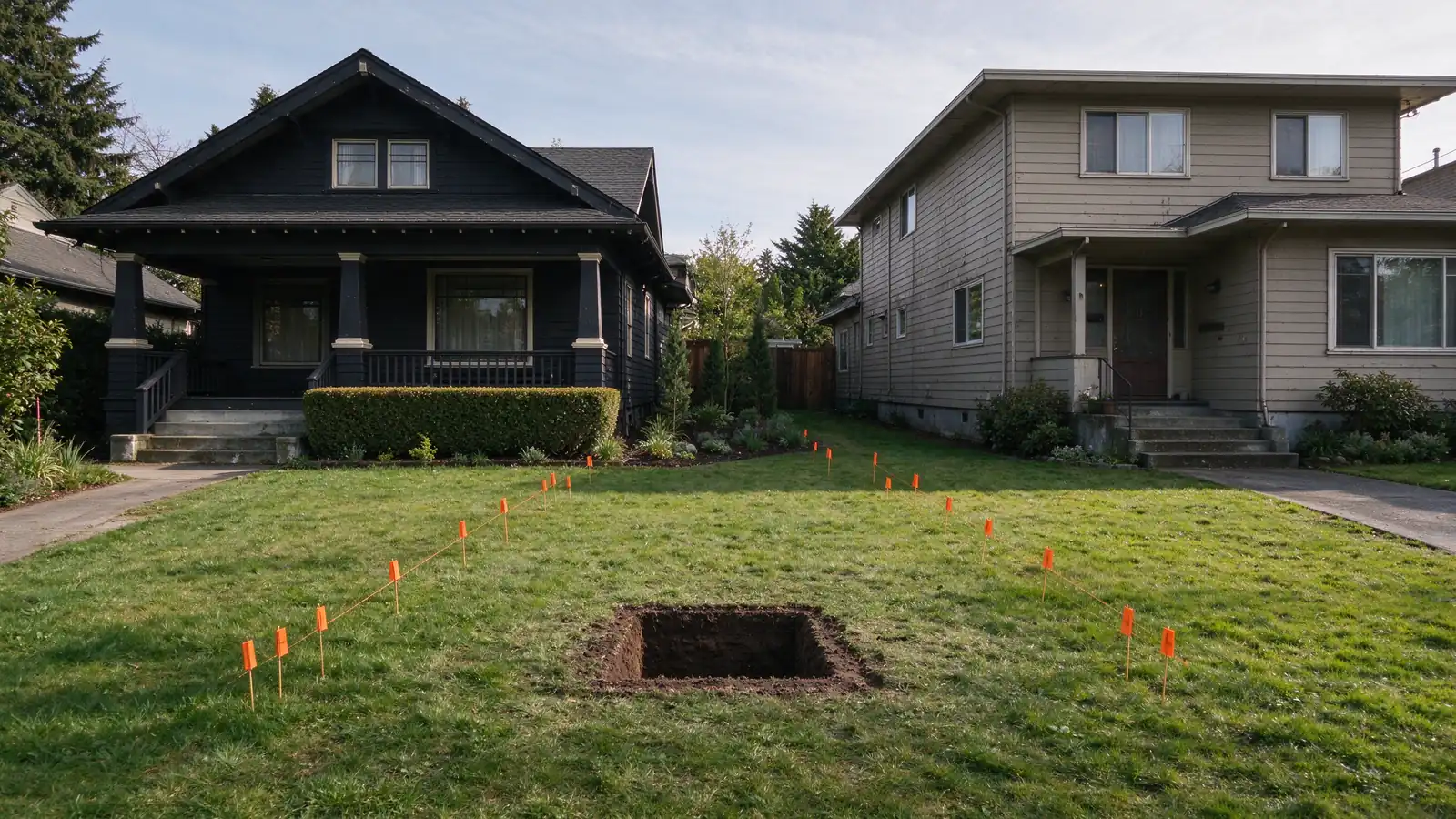
A shared sewer problem can surface in one building while the defect sits in pipe used by several properties. Before a private repair is authorized, establish where the lines join, which section is affected and who can grant access. The physical scope and the owners’ payment arrangements are related decisions, but one does not automatically settle the other.
Douglas Sewer Line Repair Seattle provides shared side sewer repair in Seattle for connected homes, rental properties and commercial buildings. Work is performed by fully licensed and insured contractors. The service focuses on defining and repairing the affected private piping, with the connected properties and practical work constraints kept visible throughout planning.
Trace the branches before assigning the problem
A shared arrangement can include individual branches joining a common run before the public-main connection. An obstruction on one branch presents a different scope from a failure downstream of the join. The building with the first backup is not necessarily the only property contributing flow through the affected pipe.
Symptoms help describe the event, but they do not map the system. Ask which fixtures and buildings were affected and what changed after cleaning. A blockage that clears from one access point may remain unexplained if nobody has established the route or the location of connected branches.
Seattle Public Utilities’ side sewer defect guidance describes shared maintenance and connection issues. Historical records, including sewer cards and recorded easements, can help identify the arrangement. Field findings still need to be checked against those records because later repairs or alterations may have changed the route.
Distinguish pipe evidence from access and payment rights
A camera recording can document a branch, material change or defect along the path it reaches. It does not establish who has legal access across a neighboring parcel or how several owners must divide a repair charge. Those questions may depend on recorded agreements and circumstances outside the inspection.
Collect the relevant documents before equipment access becomes urgent. A useful project file includes available sewer records, easement information, prior repair documents and the complete inspection recording. If the documents conflict, keep that uncertainty explicit rather than letting a line drawn on a sketch become an unsupported property-rights conclusion.
The contractor needs to know who may authorize the physical work and who will coordinate with occupants. An estimate addressed to one person does not silently authorize work on another owner’s land. Resolve the necessary permissions and written authorization through the responsible parties before the repair depends on them.
Inspect from access points that answer the shared question
The starting point of an inspection matters. A camera entering one branch may not establish the condition of another incoming line. It may show the common run while leaving a separate branch uninspected, or stop at an obstruction before the join. The report should label that boundary rather than describing every connected building as inspected.
A surface locate helps relate the visible join and defect to the ground above. The footage counter measures travel from its access, not distance from a property line. Several recordings should be labeled with their respective starting points and directions so they can be compared meaningfully.
Appropriate preparation can improve visibility where roots or deposits obscure a connection. Cleaning still needs to suit the known material and condition. Clearing a common obstruction can restore passage without repairing an open joint, collapse or low section that contributes to repeated trouble.
Preserve the connections when choosing a method
A spot repair may suit one failed common-run section where the surrounding pipe is serviceable. Its endpoints should be related to the connected branches, including any fittings that need renewal or temporary interruption. A repair described only by footage can leave those important interfaces undefined.
Lining requires a suitable host, preparation and a plan for every connection affected by the installation. A branch cannot simply disappear behind a new lining. Ask how incoming connections will remain functional and what assessment is needed before that method is offered.
Pipe bursting is replacement along an existing route, with its own access and clearance requirements. Branches, route changes and nearby utilities can limit its suitability. If an excavation is needed at a shared join, its disturbance and reconnection work belong in the written scope rather than a promise of no digging.
| Shared-line finding | Repair decision | Coordination question |
|---|---|---|
| One branch is affected before the join | Investigate that branch’s condition | Which property authorizes access and work? |
| Defect lies on the common run | Compare suitable common-section repairs | Which connected properties need notice and use restrictions? |
| Proposed lining passes an incoming branch | Define connection treatment | How is each affected branch kept functional? |
| Work crosses another parcel | Confirm the physical access route | What permissions or recorded rights apply? |
Plan sewer-use restrictions across the connected buildings
An occupied shared system needs more coordination than an empty work site. Identify who will notify each household or building manager and how changes will be communicated. A restriction on one section can affect people who are not present when the estimate is discussed.
Tell the contractor about rental occupancy, access arrangements and operations that depend on the affected sewer. Those facts do not change the underground diagnosis, but they can change the sequence and practical requirements of the repair. Do not assume temporary service arrangements are included unless the actual proposal describes them.
A clear authorization process also matters when unexpected conditions appear. Agree on who receives the new finding, what documentation is provided and how a scope change is approved. That avoids a situation in which the pipe is open but the responsible parties have not agreed on the next physical step.
Use the right Seattle ownership and permit boundary
In Seattle, the owner-maintained side sewer can extend beyond the property boundary toward the public-main interface. A common run beneath a street is not automatically municipal pipe. Confirm where the private scope ends before including work at the main connection or assuming the City will perform it.
SPU’s permit pathway applies to the relevant side sewer work. Public right-of-way excavation or staging can involve separate SDOT requirements. The proposal should identify who coordinates approvals, inspections and any required record of the final arrangement.
Neighboring jurisdictions can use different ownership rules. A Seattle description should not be copied into a Shoreline shared-line estimate without checking the serving utility and records. The ownership guide helps organize those questions without treating a regional boundary as universal.
Compare a shared scope without inventing an equal split
The total depends on the physical work, access, branches, permits and restoration. A localized spot-repair planning band in the Seattle area is $1,950–$8,800, while full lateral replacement has a broader $13,000–$41,600 range. Those bands are not shared-line rates, per-owner charges or Douglas quotes.
Ask each proposal to show the same endpoints and connection responsibilities. Does it include reinstating the access passage, work on individual branches, inspection of retained sections or only the common repair? A lower total may describe less work, while several separate allowances can also duplicate the same mobilization or surface work.
Payment allocation should be resolved by the responsible parties using their agreements and appropriate advice where needed. A technical recommendation does not establish a universal fifty-fifty split. Insurance decisions likewise depend on the respective policies and causes, not simply the presence of a shared connection.
Keep one coherent completion record
After the repair, retain the final route, repaired endpoints, branch treatment, available verification and applicable approvals. Share the relevant record with the parties responsible for the system. It should distinguish the common work from any individual branch that remained uninspected or outside the agreement.
Get an Estimate with the symptoms, connected properties and complete recordings available. If ownership, access or authorization is unresolved, identify that early. A repair plan can address the pipe effectively only when the people responsible can authorize the actual work area and scope.
What the scope should include
- Camera trace of each branch and the shared run
- Defects recorded by distance from the join
- Stated repair section and its endpoints
- Access plan for each property involved
- Permit and easement steps that apply
- Restoration on each lot and a shared final record
How shared side sewer repair compares with the alternatives
| Option | What it changes | What it leaves | Fits when |
|---|---|---|---|
| Repair the shared section | Fixes defects past the join where both properties drain | Each owner's private branch | The defect is in the common pipe and the owners agree on scope |
| Repair one private branch | Fixes the pipe serving one property before the join | The shared section | The camera places the defect upstream of the join |
| Separate the connections | Gives each property its own side sewer | Permits, easements and connection approval to resolve | The utility allows a new connection and sharing keeps causing problems |
| Line the shared run | Rehabilitates the common pipe with limited digging | Bellies; branch connections need reinstating | The pipe holds shape and both owners consent |
How shared side sewer repair moves from inspection to record
- Trace each branchFollow every property's line to the join and along the shared run.
- Locate defectsRecord each defect by distance from the join.
- Confirm the agreementsCheck easements and agreements, and gather each owner's consent.
- Permit and repairObtain permits and complete the agreed section only.
- Share the recordProvide the final video and scope to all owners.
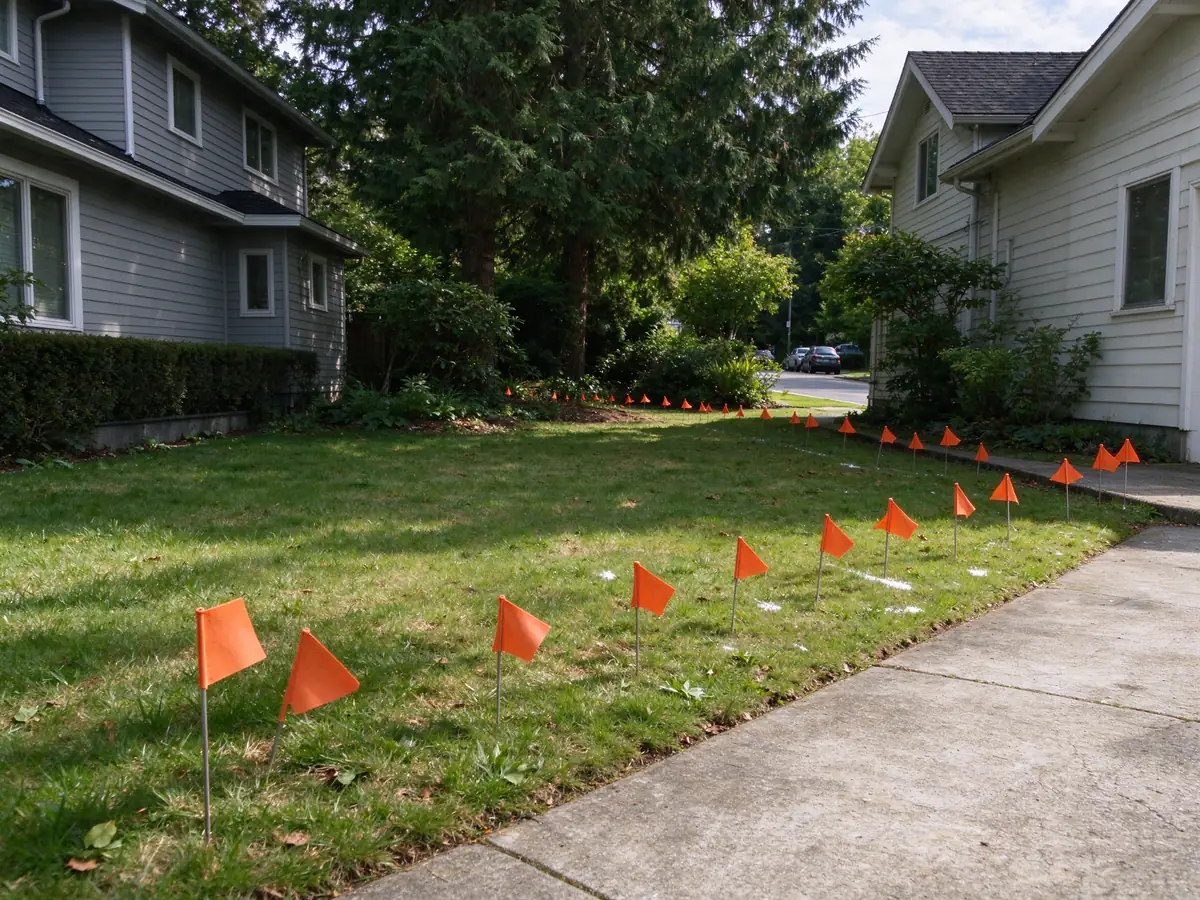
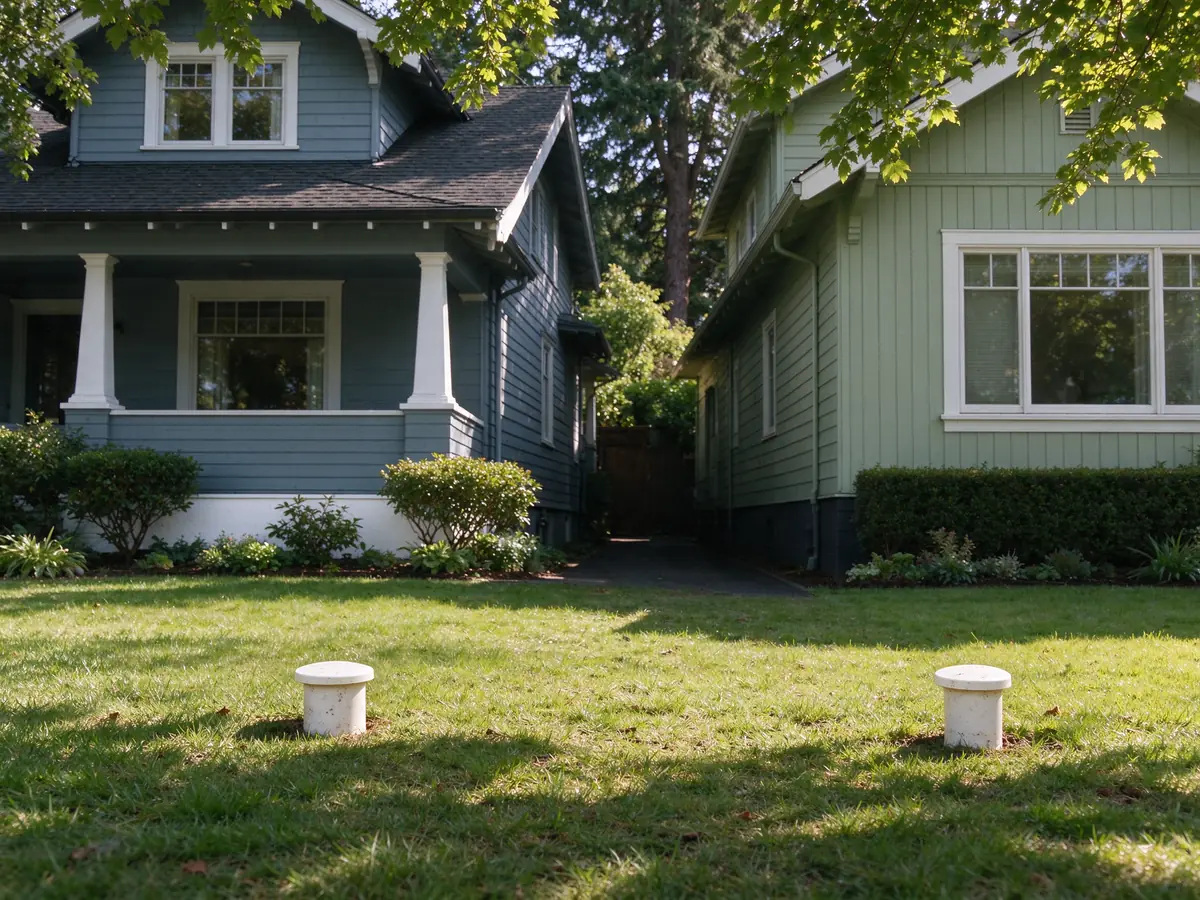
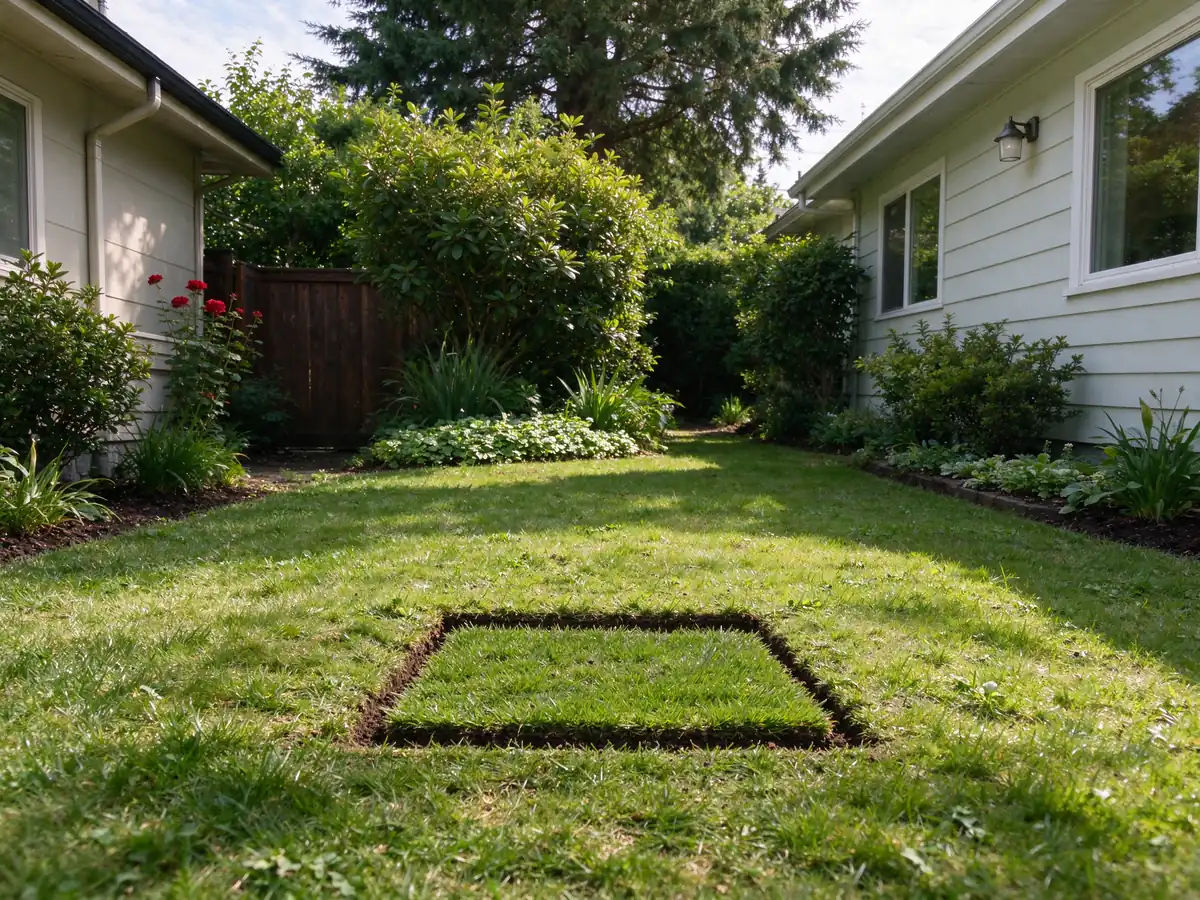
What this work looks like
Questions about this work
Does the first house to back up own the shared defect?
The symptom location does not establish the defect location or payment obligation. Trace the branches and common run, then review the relevant records and agreements.
Can one branch inspection assess every shared sewer connection?
No. A camera follows the route available from its access. Other branches may remain uninspected, and the report should identify those limits clearly.
Does a camera recording establish an easement across a neighboring lot?
No. It can show physical piping but not create or interpret access rights. Relevant recorded documents and owner authorization need separate attention.
Is a shared sewer repair bill always divided equally?
No universal allocation is established here. The responsible parties need to resolve payment using the applicable agreements and circumstances; an inspection does not decide that dispute.
What should a shared-line lining proposal say about branches?
It should identify affected incoming connections and explain their treatment. Preparation, installation access and maintaining functional branches are part of the actual scope.
Who should communicate sewer-use interruptions to tenants?
The responsible parties should establish a clear notification process before work. Identify building managers, access contacts and who can approve a change affecting connected occupants.
Can a common Seattle run remain private beneath the street?
Yes, private responsibility can extend beyond the lot boundary. Establish the main connection and applicable ownership records before assigning the street section to the utility.
What belongs in the completion file for a shared repair?
Keep the repaired route, branch treatment, retained limits, available verification and applicable closeout records together, so each responsible party understands what was changed.