
Last Updated:
What happens on the first visit
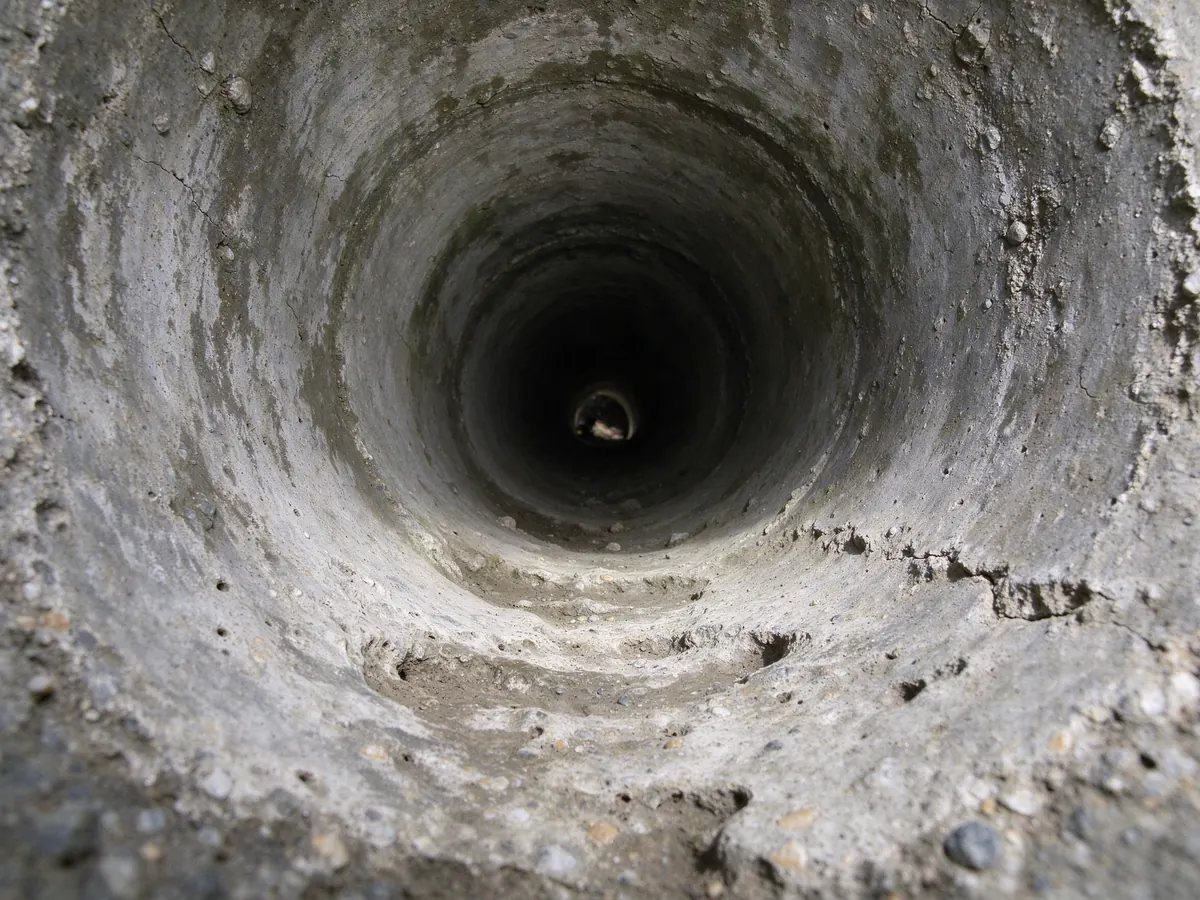
- Reading the concrete wallThe camera pass looks at the pipe wall as well as the joints: exposed aggregate, a roughened crown, cracks, and gaps where joints have separated. Distances are recorded so the worst sections can be compared with the rest of the run.
- What to have readyHave any earlier inspection video, the dates and type of past cleaning, and notes on slow drains or backups. If you know where the line leaves the house or have a sewer card showing the route, bring that to the visit too.
- What the visit can and cannot showA clean view can show surface wear and joint gaps. It cannot measure exactly how much wall thickness remains, and deposits can hide damage. That uncertainty is why the method choice often waits for cleaning and a second pass.
- The written scopeThe scope lists the affected sections by distance, the method for each, where new pipe or liner meets the remaining concrete, the permit path, the restoration included and the camera record that will confirm the finished work.
Concrete sewer pipe repair in Seattle begins with the joint and wall condition, not the assumption that concrete must be replaced everywhere. A damaged socket, an isolated crack and widespread deterioration create different scopes. The inspection needs to establish which condition is present and whether the surrounding lateral can remain in service.
Douglas Sewer Line Repair Seattle repairs concrete side sewers serving residential, shared and commercial properties. Work is performed by fully licensed and insured contractors. The proposal should connect the visible defect to a suitable repair, including the transitions between retained concrete and any new material.
Read the wall as well as the joint
Concrete pipe is rigid. Its individual sections depend on sound joints and support beneath them to maintain an aligned drainage route. A pipe barrel can remain recognizable while a joint opens, admits roots or creates an internal ledge. Repairing that joint is a different purchase from renewing a run whose wall has deteriorated at several locations.
Seattle Public Utilities describes exposed aggregate among the concrete-pipe findings that warrant attention. A rough surface still needs interpretation: deposits, poor lighting and actual wall loss should not be treated as interchangeable. The recording should show the affected section clearly enough to explain why the finding matters and which part of the proposal addresses it.
The SPU defects guidance provides useful local context. It does not establish the condition of an individual property’s lateral. Neither a house’s age nor a concrete pipe visible in one image proves that every connected section uses the same material.
Establish an inspectable route before measuring the repair
The first assessment reviews recurring blockages, past work, available access and the complete recording if one exists. Appropriate cleaning may be necessary to distinguish the wall from deposits. Preparation has to suit the known condition; a deteriorated pipe should not be treated as though it were an undamaged conduit simply because stronger cleaning equipment is available.
A camera that cannot pass a displaced joint or obstruction leaves an uninspected area. That limit belongs in the findings. It should not quietly become a claim that everything beyond the stopping point has collapsed. A different access point or further investigation may change both the feasible method and the proposed length.
Surface sewer line locating helps relate a camera finding to a work area. The footage counter alone does not establish depth, a property boundary or an excavation position. Records, locating and the visible route need to be considered together before pricing a small repair beneath a driveway or beside a building.
A short replacement must fit the retained concrete
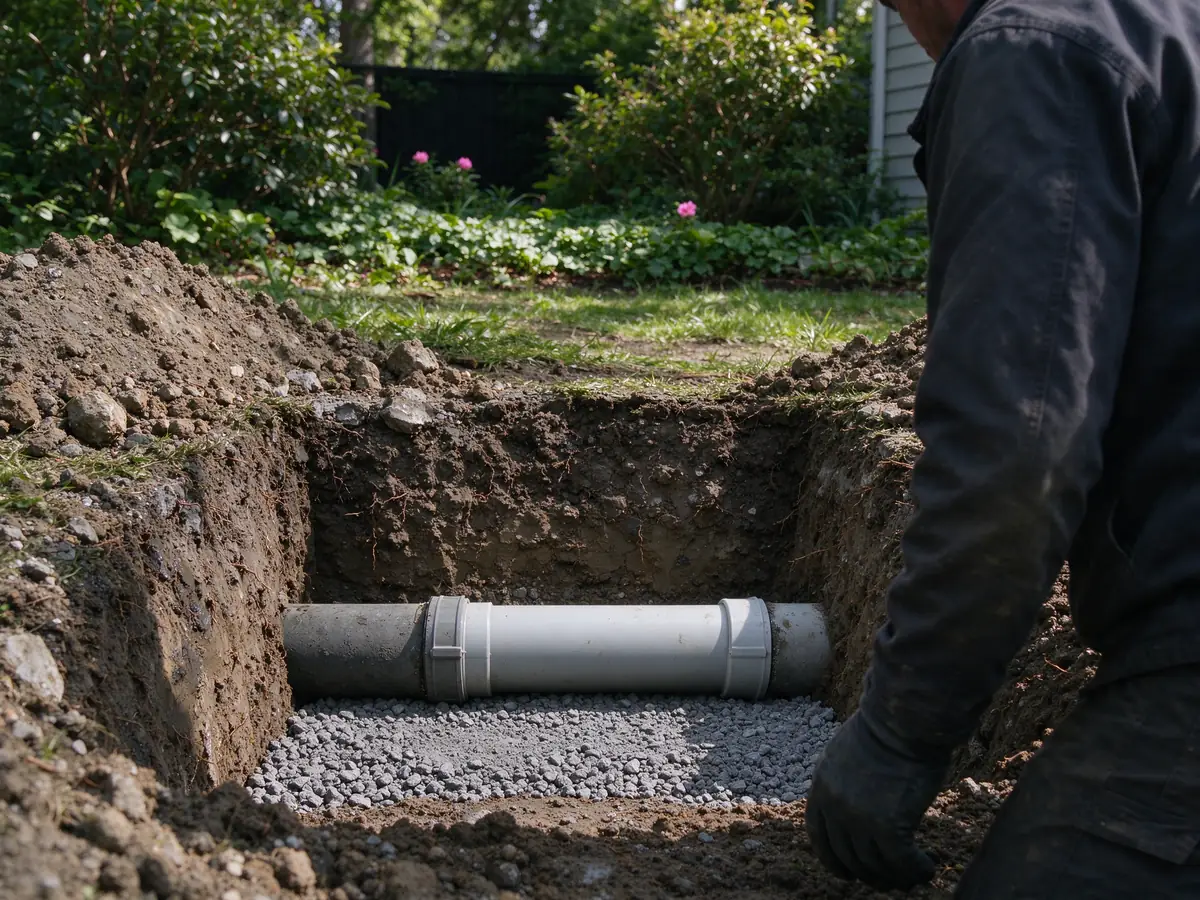
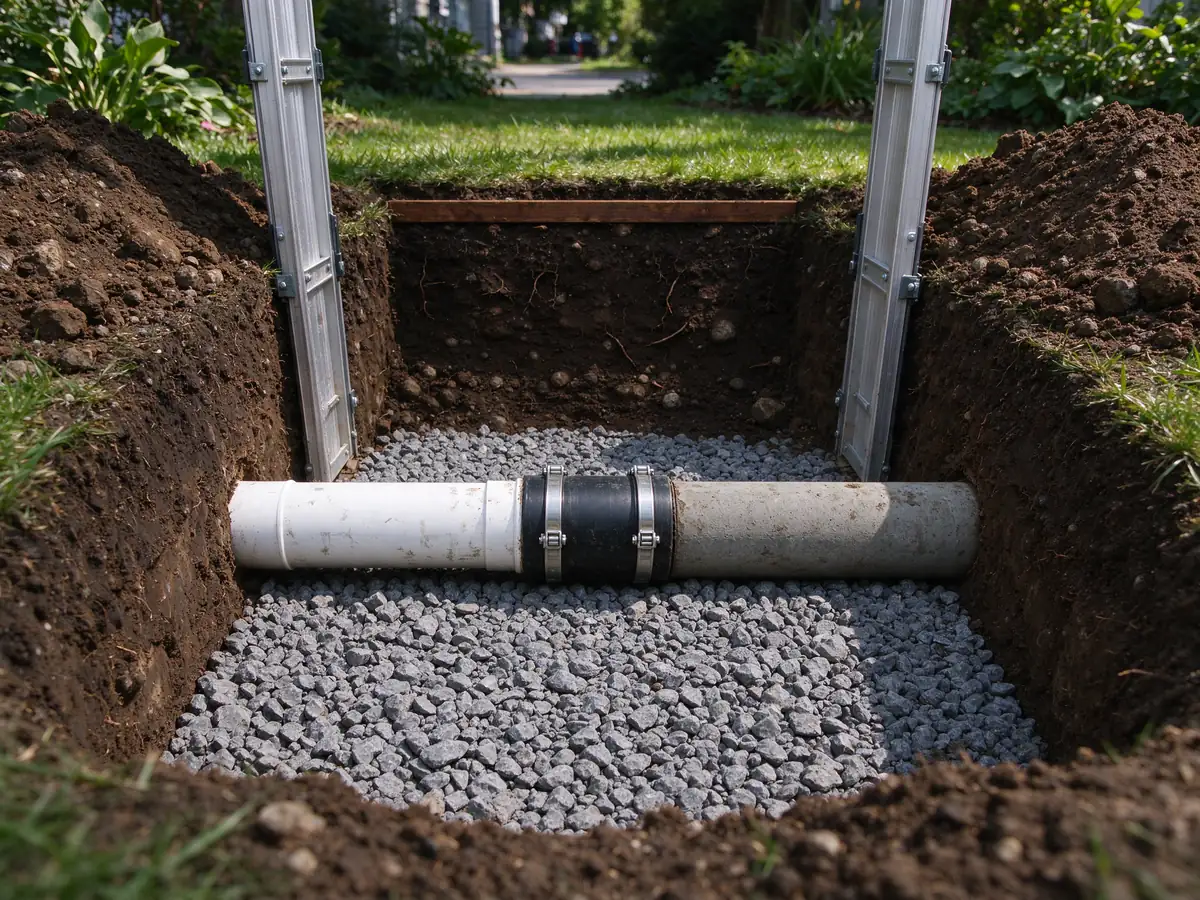
Where the defect is confined and the remainder is serviceable, a spot repair can remove the failed portion while leaving usable concrete in place. The connection details deserve attention. The actual pipe dimensions, wall condition and material transition determine how a new section is joined; a generic plastic fitting is not automatically suitable for an old concrete barrel.
Exposing the defect also allows the contractor to assess the support beneath the affected section. Replacing the broken wall without addressing a localized loss of bedding can leave the new work vulnerable to movement. The written scope should describe the retained endpoints and what happens if the exposed concrete cannot support the planned connection.
A change discovered after opening needs a documented scope decision. Ask whether the allowance covers extending the repair to a sound joint, replacing a damaged transition or obtaining additional inspection. That is more useful than a vague commitment to replace whatever is needed without an agreed method of authorization.
Lining depends on a suitable host and alignment
CIPP lining may be worth assessing where the concrete host is sufficiently continuous, prepared and suitable for the proposed system. It creates an internal lining rather than rebuilding the bedding outside the pipe. Branches, changes in diameter and the termination at each end still need a plan.
A liner does not lift a low section or realign a severely displaced route. If concrete pipe has settled into a belly, a wall-renewal proposal needs to explain how the drainage profile is being addressed. Installing a new interior surface while leaving the same low point may answer the wrong problem.
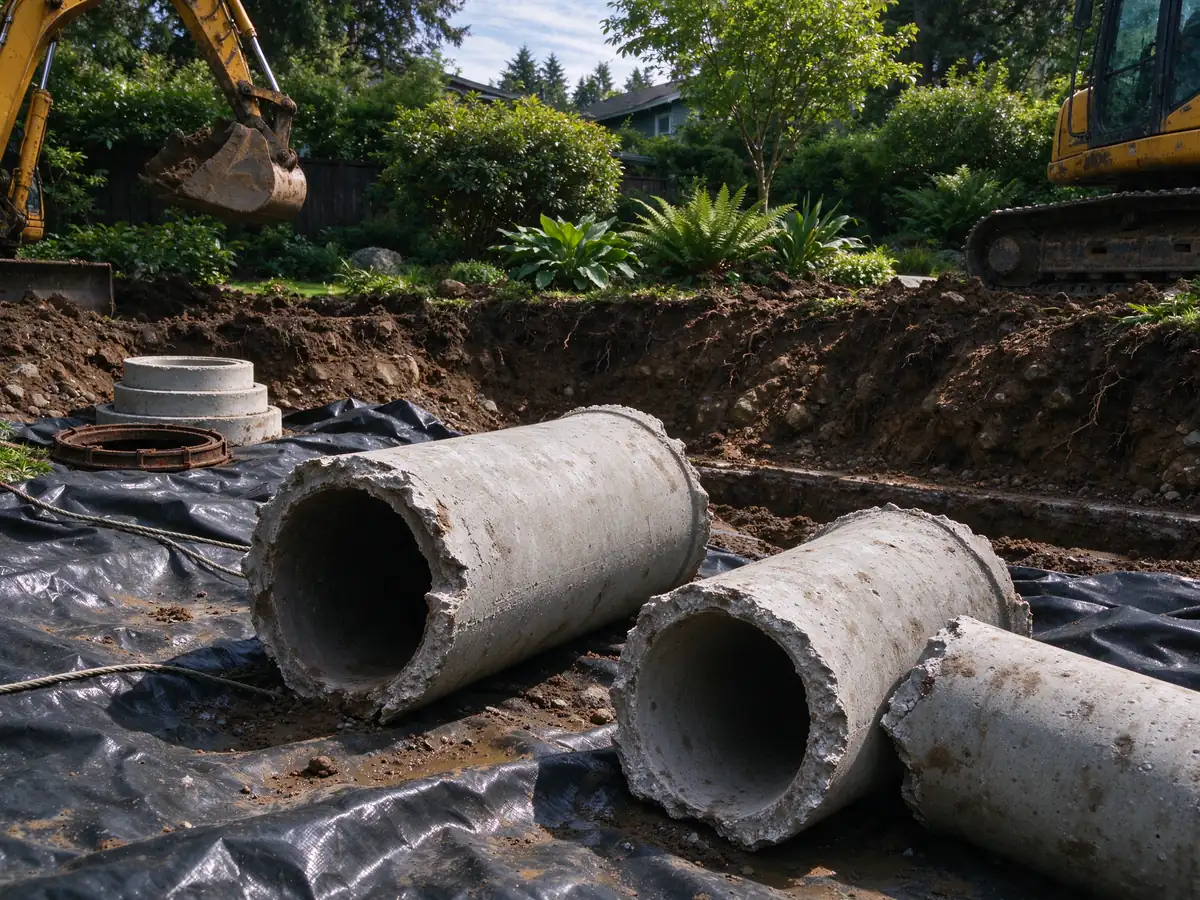
Replacement becomes the more relevant comparison when the host is too damaged, the route needs correction or failures extend beyond a sensible isolated repair. Open access, bursting suitability and restoration should be evaluated against the actual findings, rather than presenting trenchless work as universally possible.
| Concrete-pipe finding | Scope to compare | Important limit |
|---|---|---|
| One damaged joint with sound adjacent pipe | Localized replacement | Retained ends must support suitable connections. |
| Suitable continuous pipe with wall or joint defects | Assessed lining proposal | Preparation, branches and grade remain decisive. |
| Low or displaced section | Direct-access grade or alignment repair | A liner alone does not move the route. |
| Multiple failures or unsuitable host | Broader replacement | Define endpoints and surfaces before comparing prices. |
Seattle work limits can extend past the lawn
A Seattle side sewer can remain privately maintained beyond the property line, up to the defined interface with the public main. Do not assume an old concrete section under the street is automatically City-owned. Establish the ownership boundary before deciding which work belongs in the private proposal.
SPU’s side sewer permit guidance is the starting point for the applicable Seattle approval path. Excavation or equipment staging in the public right-of-way can involve separate SDOT requirements. An exterior side sewer and interior building drainage also have different regulatory interfaces.
Shared runs add another question: which branches use the affected section? A repair should preserve those connections and identify the access needed. An inspection can show the physical arrangement, but it does not decide the legal allocation of a shared bill or replace recorded agreements between property owners.
Budget for the repair category rather than the material label
There is no verified universal price for repairing concrete sewer pipe. For a localized defect with a sound remainder, the Seattle-area spot-repair planning band is $1,950–$8,800. Complete lateral replacement has a broader $13,000–$41,600 planning span. Neither is a Douglas quote or a material-specific rate.
An accessible standalone camera inspection has a $250–$500 local budgeting range, with cleaning, difficult access and additional work potentially separate. Avoid adding that figure to a proposal that already includes inspection. The cost guide separates the scope bands and explains why an attractive per-foot number may omit access and restoration.
Ask the estimate to identify excavation, transitions, pipe support, hauling, backfill and the finish above the work. Concrete paving, planting beds and a public street are not equivalent restoration tasks. If insurance is involved, preserve the recording and cause description, then ask the carrier which documentation and review its policy requires.
Keep the repaired section identifiable afterward
Before work starts, agree on access, sewer-use restrictions and the condition under which a change in scope requires authorization. Nobody should enter an excavation or handle sewer equipment simply to help establish a finding. Safe access and protective measures belong in the contractor’s work plan.
At completion, retain the final endpoints, material and transition details, available verification footage and applicable permit closeout information. Record which concrete sections were retained. A partial repair is useful precisely because it has defined limits; those limits should remain clear when a later inspection or property transaction raises questions about the rest of the lateral.
Get an Estimate with the property address, the concrete-pipe finding and any earlier repair records. A concise description of what remains uncertain helps turn a broad material concern into a repair scope that can be compared.
What the scope should include
- Cleaning needed for a readable inspection
- Wall and joint findings recorded by distance
- Named method and endpoints for each section
- Connections between new pipe and remaining concrete
- Side sewer permit and inspection steps
- Surface restoration and final camera record
How concrete sewer pipe repair compares with the alternatives
| Option | What it changes | What it leaves | Fits when |
|---|---|---|---|
| Clean and re-inspect | Removes deposits so exposed aggregate and joint gaps can be read | Wall loss and joint separations | Deposits hide the wall or the extent of damage is unclear |
| Spot repair | Replaces a failed concrete length with new pipe and couplings | Weakened wall elsewhere in the run | Damage is confined and the adjacent concrete is sound enough to connect to |
| CIPP lining | Forms a new pipe inside the concrete and seals the joints | Sags and sections that have lost their shape | The host pipe is continuous, holds shape and sits on acceptable grade |
| Replacement | Removes the deteriorated concrete and installs new pipe at a set slope | The public main and any stub outside the scope | Exposed aggregate or joint failure runs along much of the line |
How concrete sewer pipe repair moves from inspection to record
- Clean for a clear viewRemove deposits so the wall and joints can be read on camera.
- Assess wall and jointsRecord exposed aggregate, cracks and joint gaps by distance along the run.
- Choose the methodWeigh spot repair, lining or replacement against how much of the run has worn.
- Permit and workObtain the side sewer permit and complete the defined section or run.
- Verify on cameraInspect the finished line and keep the video with the scope.
What this work looks like
Questions about this work
Does exposed aggregate always require replacing the whole concrete lateral?
No. Its significance depends on the extent and condition of the wall, surrounding joints and remainder of the run. The recording should connect the finding to a defined recommendation.
Can a plastic repair section connect to an existing concrete sewer?
It can where the retained pipe supports an appropriate approved transition. Actual dimensions, wall condition, loading and support determine the connection details.
Is concrete pipe deterioration the same as a blocked sewer?
No. Deposits can obstruct otherwise serviceable pipe, while wall or joint defects can remain after clearing. Inspection visibility and the underlying condition need separate consideration.
Will relining straighten displaced concrete pipe?
A liner generally follows the existing host. Significant offsets or a low route need a method that addresses alignment or grade, not just the pipe wall.
Why identify concrete repair endpoints before excavation?
They establish which pipe is retained, where suitable transitions can be made and which surfaces may open. Unknown conditions beyond an inspection limit need to remain explicit.
Can one concrete sewer joint be responsible for repeated roots?
An opening at a joint can allow root entry. Clearing the roots restores passage without closing that opening; the remaining pipe condition determines whether a local repair is appropriate.
Does a concrete lateral under a Seattle street belong to the City?
Its location alone does not establish ownership. Seattle private responsibility can extend beyond the lot boundary, so confirm the precise connection and work limit.
What should I retain after a partial concrete-pipe repair?
Keep the final scope, retained endpoints, transition details, available verification and applicable approvals together. They explain what changed and which sections remain outside the work.